
What Is Indolepropionamide (IPAM)? Structure, Timeline and Lab Data
Indolepropionamide, usually shortened to IPAM and also written indole-3-propionamide, is 3-(1H-indol-3-yl)propanamide. It is a small indole molecule with CAS number 5814-93-7, the formula C11H12N2O and a molecular weight of 188.23 g/mol. Structurally it is the primary amide of indole-3-propionic acid (IPA), and its published laboratory data center on hydroxyl radical chemistry and mitochondrial electron transport.
What Is ER-100? OSK Reprogramming and Optic Nerve Research
ER-100 is an investigational gene therapy designed to restore function in retinal ganglion cells through partial epigenetic reprogramming. Its scientific foundation is controlled expression of three transcription factors: OCT4, SOX2 and KLF4, collectively called OSK. The current clinical program concerns optic neuropathies, specifically open-angle glaucoma and non-arteritic anterior ischemic optic neuropathy, or NAION. It is not an established treatment for these conditions. [1]
What Is Noopept? Omberacetam (GVS-111) Explained
Noopept, also called omberacetam or GVS-111, is N-phenylacetyl-L-prolylglycine ethyl ester. It is a small synthetic molecule built on two amino acids, proline and glycine, with a phenylacetyl cap on one end and an ethyl ester on the other. In published assay work it is studied as a ligand in the HIF-1 pathway and as a precursor of the cyclic dipeptide cycloprolylglycine. BDNF, NGF and neuroprotection appear in the literature as research-topic terms for this compound.
What Is Dihexa? PNB-0408 (Hexanoyl-Tyr-Ile-Ahx-NH2) Explained
Dihexa (PNB-0408) is a synthetic oligopeptide related to an Angiotensin IV fragment, chemically described as hexanoyl-Tyr-Ile-Ahx-NH2. PubChem CID 129010512 lists formula C27H44N4O5, molecular weight 504.7 g/mol, and CAS 1401708-83-5.
What Is NSI-189? Phosphate Salt vs. Freebase Explained
NSI-189 is a small synthetic molecule, not a peptide: a benzylpiperazine-aminopyridine amide with the formula C22H30N4O, a molecular weight of 366.5 g/mol, CAS 1270138-40-3, and the nonproprietary name amdiglurax. NSI-189 Phosphate is the same molecule paired with phosphoric acid, C22H33N4O5P at 464.5 g/mol (CAS 1270138-41-4), the crystalline salt form described in its synthesis patent. No receptor binding constant has been published for it, so it is best described by its chemistry.
Is 9-Me-BC a Peptide? 9-Methyl-β-Carboline Explained
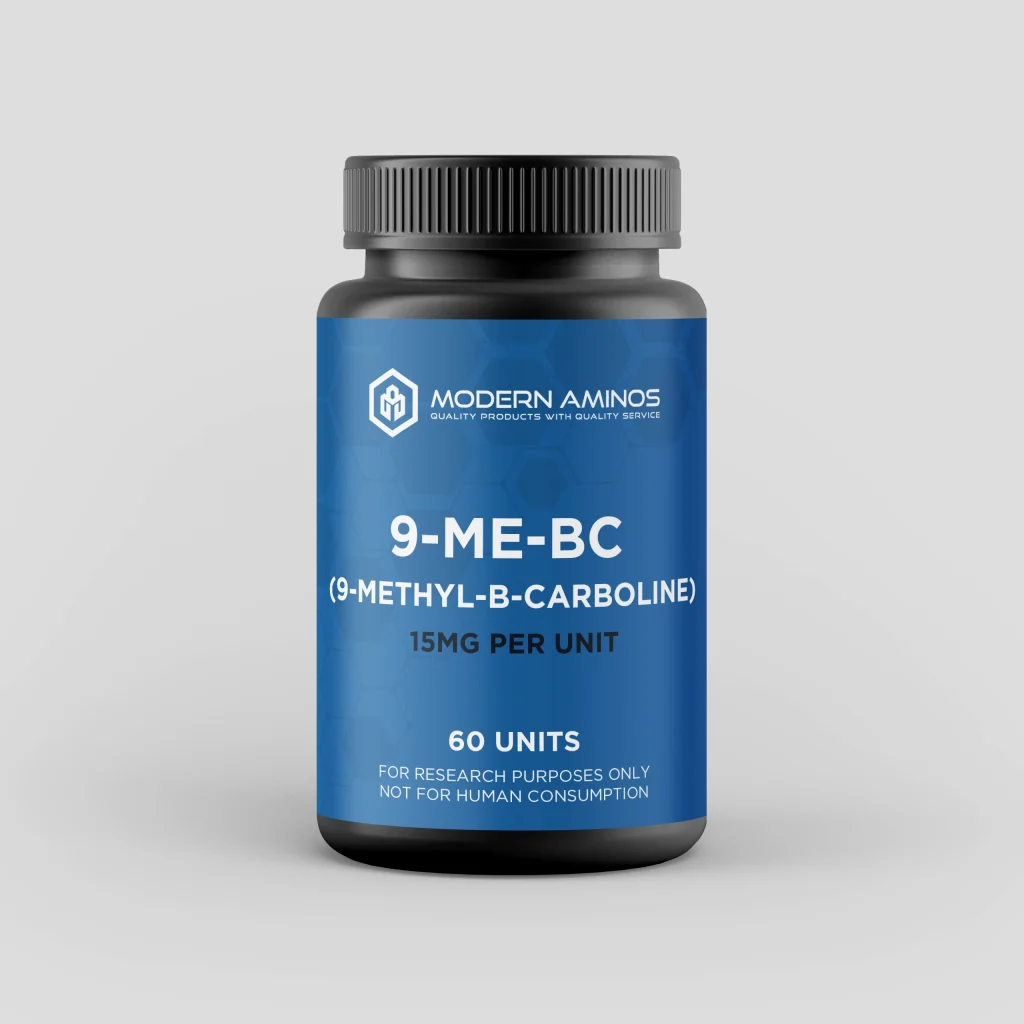
No. 9-Me-BC is 9-methyl-β-carboline (9-methylpyrido[3,4-b]indole), a small, flat, three-ring aromatic molecule with no amino-acid residues and no peptide bonds. Its formula is C12H10N2, its molecular weight is 182.22 g/mol, its CAS number is 2521-07-5, and it is studied as a monoamine oxidase (MAO) inhibitor from the β-carboline family.
What Is Pinealon? The Glu-Asp-Arg (EDR) Tripeptide Explained
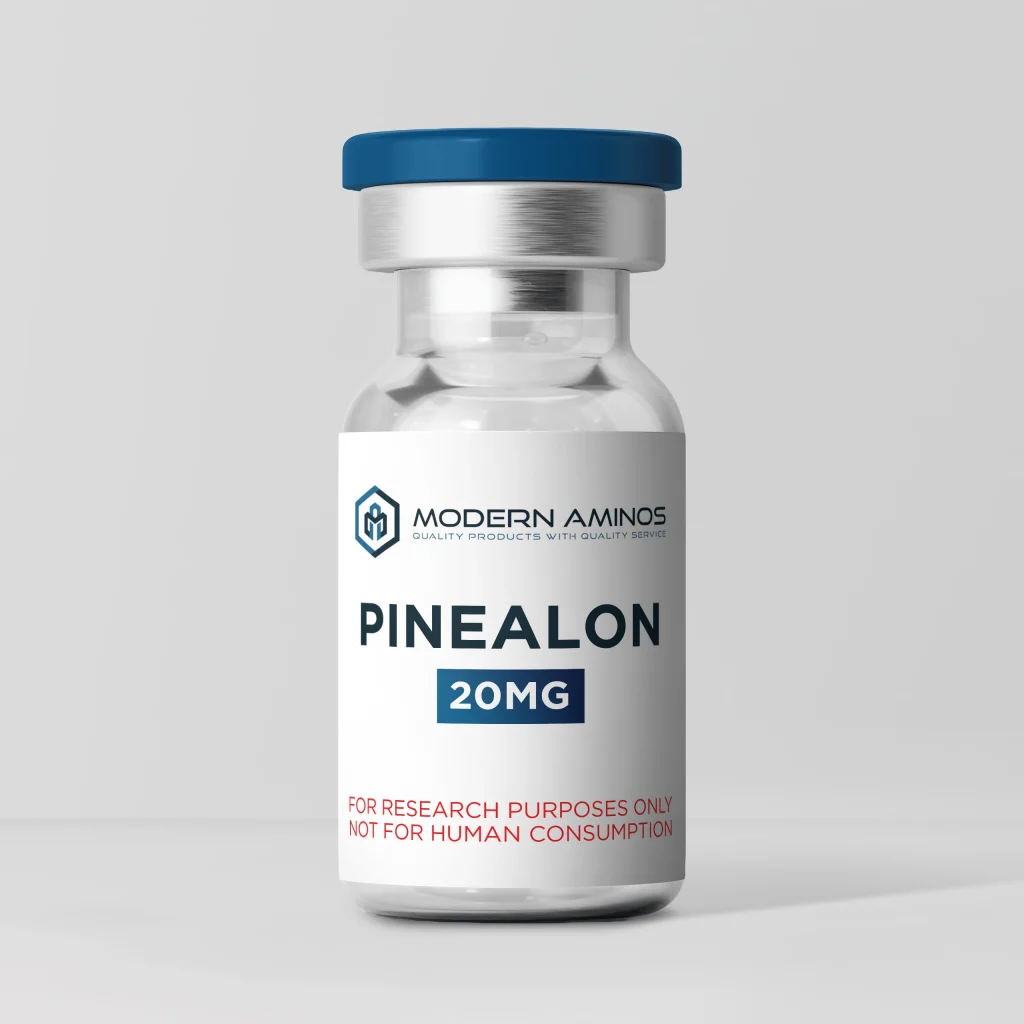
Pinealon is the synthetic tripeptide Glu-Asp-Arg, often written EDR, with CAS number 175175-23-2 and a molecular weight of 418.40 g/mol. It is three amino acids, glutamic acid, aspartic acid, and arginine, linked into one small and highly polar peptide. In laboratory studies it binds DNA, partly entering the major groove and touching guanine atoms, and it also binds histone proteins.
Alpha GPC vs. Choline: Comparing Two Choline Research Compounds
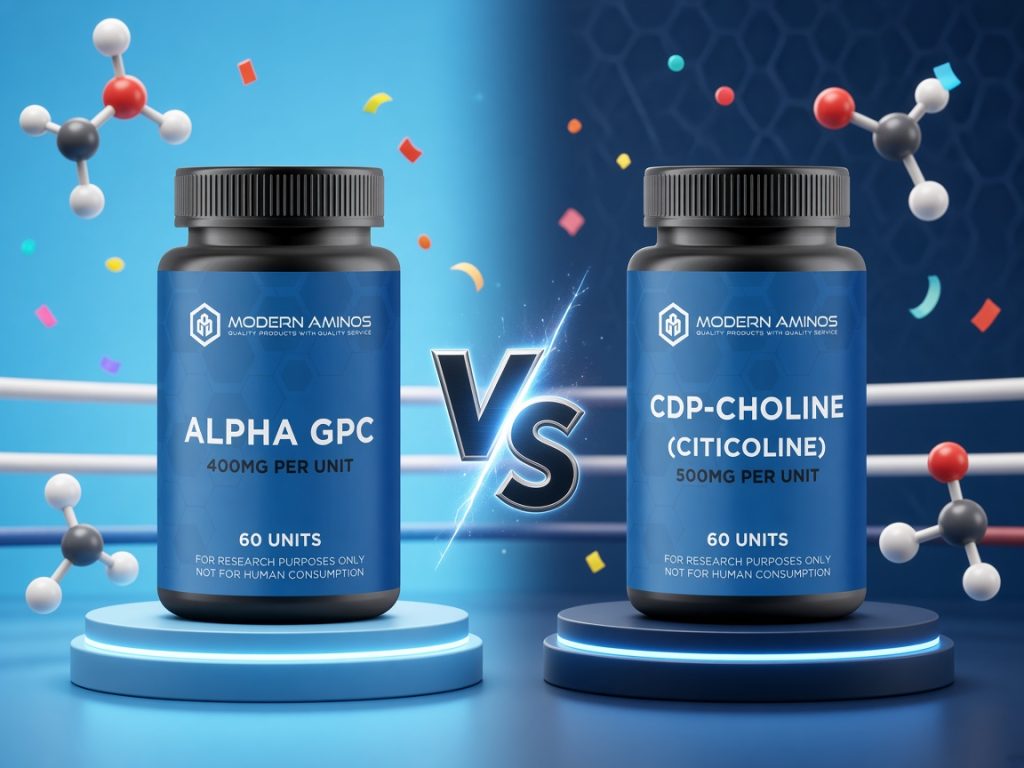
Alpha GPC and Choline are both choline donors, but they deliver choline differently. Alpha GPC is a glycerophosphocholine ester that is about 41% choline by weight and splits into choline and glycerophosphate. Choline supplies choline plus cytidine, which is converted to uridine and feeds phospholipid synthesis. In published research, Alpha GPC has the deeper physical-performance record, while Choline has the deeper neuroprotection, membrane-repair and safety record.
Choline: What It Is, How It Works, and What Research Shows
Choline is a naturally occurring intermediate in the biosynthesis of phosphatidylcholine, a major phospholipid of cell membranes. In laboratory settings it is produced synthetically for ingredient characterization, formulation analysis and neuroscience-related research.
Alpha GPC: What It Is, How It Works, and What Research Shows
Alpha GPC, also known as choline alfoscerate or L-α-glycerylphosphorylcholine, is a choline-containing compound that occurs naturally in small amounts in the body and is also produced synthetically for laboratory research. Structurally, it is a glycerophosphocholine ester made of a glycerol backbone, a phosphate group and a choline group, and its high choline content by weight makes it a frequently referenced choline donor in neuroscience research.