
Overview of Alpha GPC
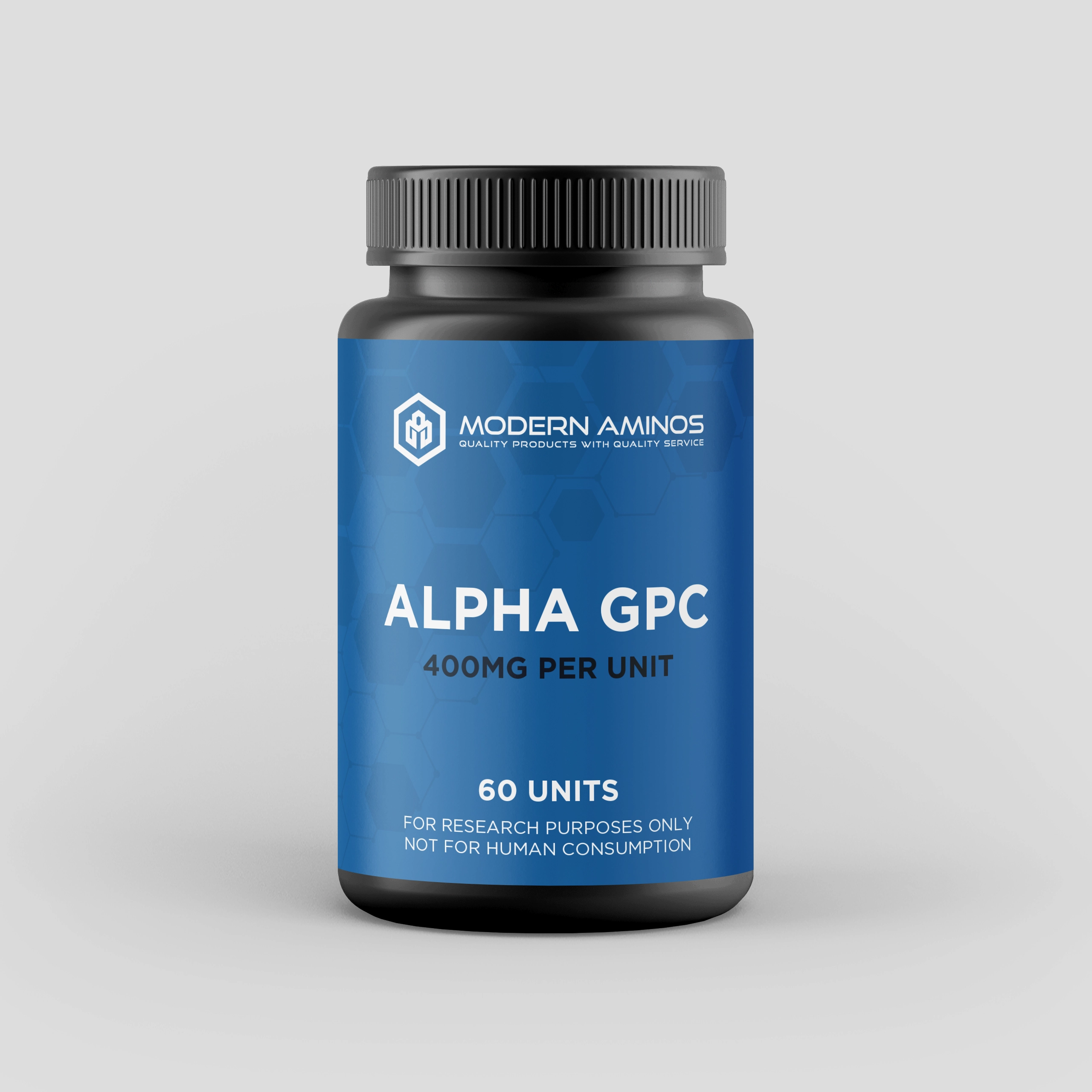
Chemical Identifiers & Key Properties
- CAS Number: 28319-77-9
- Molecular Formula: C8H20NO6P
- Molecular Weight: 257.22 g/mol
- IUPAC Name: [(2R)-2,3-dihydroxypropyl] 2-(trimethylazaniumyl)ethyl phosphate
- Synonyms: Choline alfoscerate, L-α-GPC, Glycerophosphocholine, sn-glycero-3-phosphocholine
- PubChem CID: 657272
- Melting Point: Approximately 142.5°C to 143°C
- Choline Density: It is highly efficient by weight, containing roughly 40% choline within its molecular structure.
Physical State & Analytical Attributes
- Appearance: High-purity pure powder (99%+) is typically white with a neutral odor. It can also appear as a colorless, highly viscous liquid in specific aqueous solutions.
- Hygroscopy: Alpha GPC is highly hygroscopic. It rapidly absorbs moisture from the surrounding environment, turning into a gel-like substance if exposed to air. Because of this, it is often blended with carriers (like silica or calcium phosphate) into 50% powder forms for consumer stability or handled strictly under specialized dry storage.
- Solubility: It is highly soluble in water (50 mg/mL, resulting in a clear, colorless to faintly yellow solution) and lower alcohols.
What is Alpha GPC?
This article is for research purposes only and provides an educational overview of Alpha GPC (alpha-glycerylphosphorylcholine) as a research compound. It does not contain dosing information, medical claims, or usage instructions.
Alpha GPC, also known as choline alphoscerate, is a choline-containing compound that occurs naturally in small amounts in the body and can also be produced synthetically for laboratory and research use. Structurally, it is a glycerophosphocholine ester made up of a glycerol backbone, a phosphate group, and a choline molecule. Because of its relatively high choline content by weight, Alpha GPC is frequently referenced in neuroscience and cognitive research literature as an efficient choline donor.
Alpha GPC is studied by researchers examining ingredient characteristics, formulation behavior, and analytical properties in controlled laboratory settings, consistent with how Modern Aminos’ Alpha GPC 400MG research material is intended to be used.
How Alpha GPC Works
In published research, Alpha GPC is described as a precursor molecule that can be broken down into two components after ingestion: a choline fraction and a glycerophosphate fraction.
- The choline fraction is studied for its role as a building block for acetylcholine, a neurotransmitter involved in cholinergic signaling pathways in the nervous system.
- The glycerophosphate fraction is examined in research contexts for its potential contribution to phospholipid synthesis, which relates to cell membrane composition.
Because Alpha GPC is reported to cross the blood-brain barrier, it is frequently included in research protocols investigating cholinergic activity in the central nervous system. Researchers have also studied its potential relationship to dopaminergic and serotonergic signaling pathways in animal models, in addition to its more established cholinergic mechanisms.
Areas of Research Interest
Scientific literature has explored Alpha GPC across several research domains. It is important to note that these findings come from controlled studies and do not represent claims about outcomes for any individual.
- Cognitive research: A substantial body of research has examined Alpha GPC in the context of cognitive performance and age-related cognitive changes, particularly in study populations with dementia or vascular cognitive concerns.
- Neurological research models: Preclinical studies have investigated Alpha GPC’s role in models related to cerebrovascular processes and neuronal signaling.
- Physical performance research: Some research has explored Alpha GPC in the context of power output, growth hormone secretion, and exercise-related outcomes in athletic study populations.
- Choline metabolism studies: Given its choline density, Alpha GPC is used in research examining choline repletion and systemic choline status.
Research Considerations and Safety Signals
As with any research compound, published literature identifies considerations that are relevant to researchers designing studies or reviewing existing data:
- Commonly reported observations in human research include gastrointestinal effects such as nausea or digestive upset.
- Some observational research has raised questions about long-term use and cerebrovascular risk markers, an area that continues to be studied and is not yet fully understood.
- As a cholinergic-pathway compound, researchers studying Alpha GPC alongside other cholinergic agents or in seizure-related models take into account potential additive effects on acetylcholine activity.
These considerations underscore why Alpha GPC is typically restricted to controlled research environments rather than general consumer use.
Why Alpha GPC Is Used in Laboratory Research
Alpha GPC’s well-characterized chemical structure and relatively high choline yield make it a useful reference compound for laboratories studying choline-based ingredients. Researchers often evaluate it alongside other choline donors, such as CDP-Choline, to compare composition, analytical behavior, and mechanism-related characteristics. For a closer look at how these two compounds compare, see our article on Alpha GPC vs. CDP-Choline.
Modern Aminos supplies Alpha GPC 400MG as a research material manufactured under quality-focused standards for laboratories conducting ingredient evaluation and analytical investigation.
Summary
Alpha GPC is a choline-containing research compound studied for its role as an acetylcholine precursor and its potential relevance to cholinergic signaling research. It has been explored in cognitive research, neurological research models, and physical performance studies, while researchers also track safety-related signals reported in the literature, particularly around long-term use. As with all Modern Aminos research materials, Alpha GPC is sold strictly for laboratory research purposes.
References
- Alpha-Glycerylphosphorylcholine Increases Motivation in Healthy Volunteers – PMC, National Institutes of Health
- Alpha-GPC: Uses, Side Effects, Interactions – WebMD
Key Takeaways
- Alpha GPC is a choline-containing compound studied mainly for its role as an acetylcholine precursor in research contexts.
- Research highlights Alpha GPC’s potential in cognitive, neurological, and physical performance studies, revealing varied areas of interest.
- Safety considerations include gastrointestinal effects and ongoing questions about long-term use and cerebrovascular risks.
- Alpha GPC crosses the blood-brain barrier, enhancing its relevance in studies related to cholinergic signaling pathways.
- Modern Aminos offers Alpha GPC strictly for laboratory research purposes, underscoring its intended use.