
The two compounds at a glance
Each research material below is available as a Modern Aminos catalog item, supplied strictly for laboratory research applications.
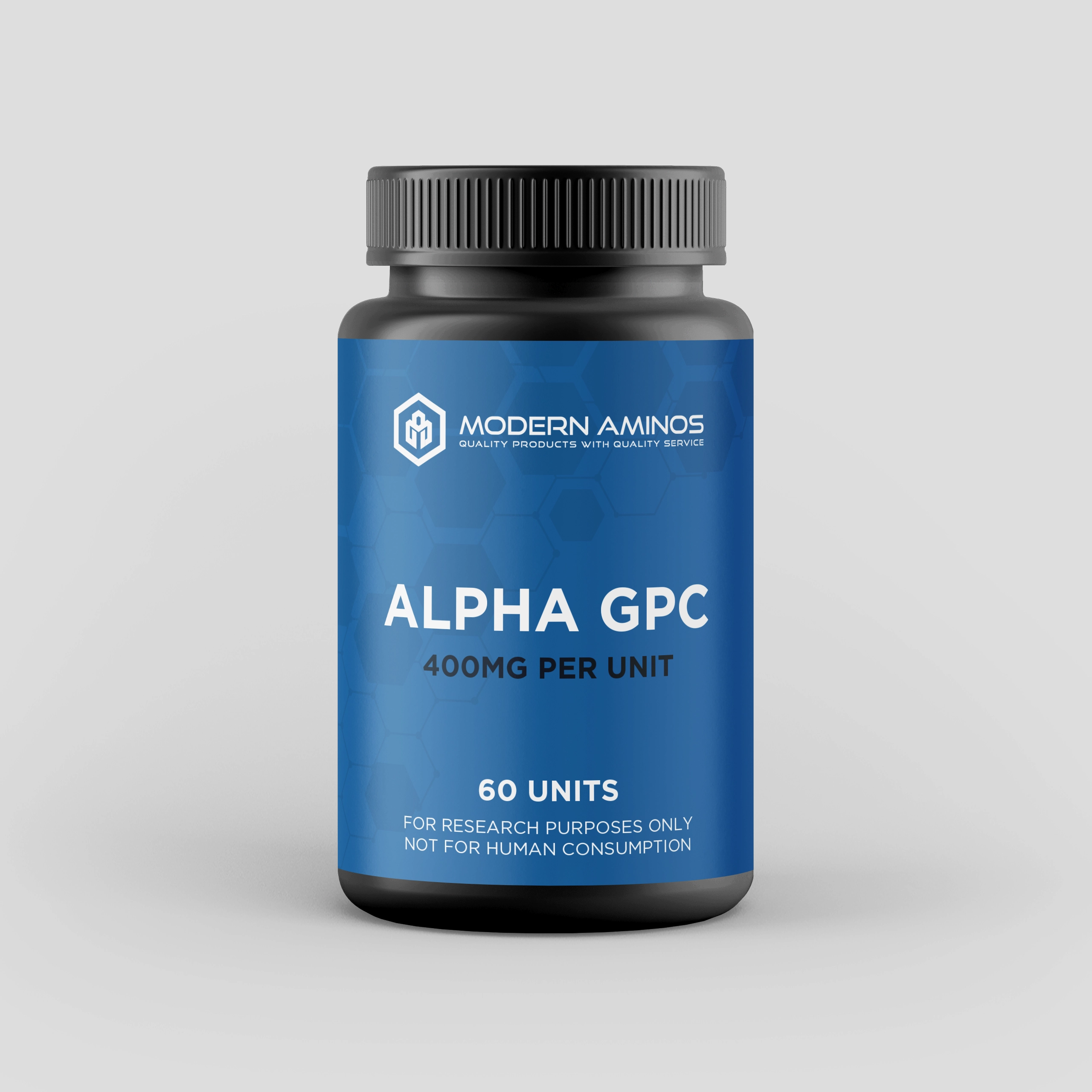
Alpha GPC (400 mg)
Glycerophosphocholine ester · ~41% choline by weight
L-alpha-glycerylphosphorylcholine (choline alfoscerate) — a naturally occurring choline-containing phospholipid studied as a direct acetylcholine precursor with studies transfusion across blood-brain-barrier.
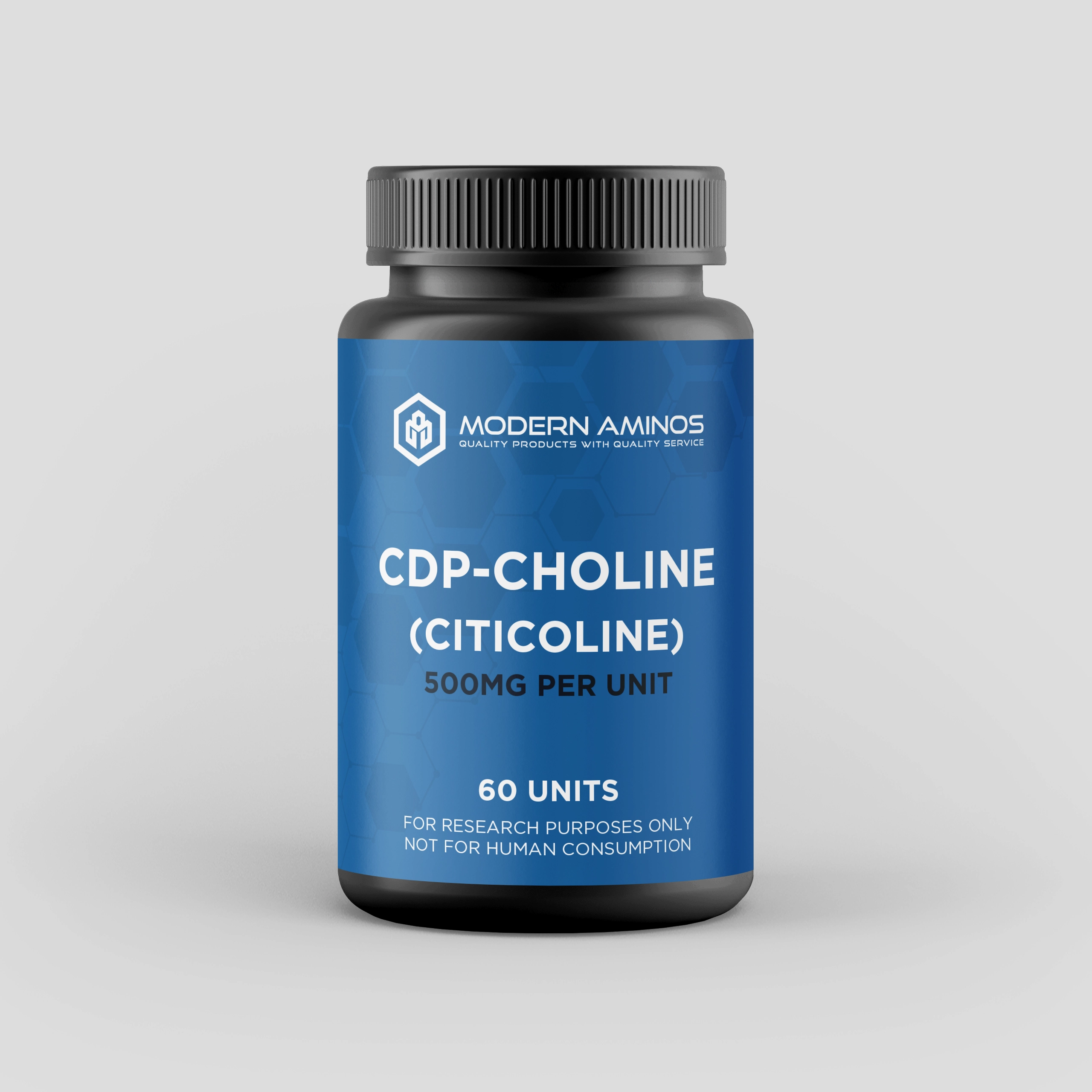
CDP-Choline / Citicoline (500 mg)
Cytidine diphosphocholine · dual choline + cytidine/uridine pathways
Cytidine 5′-diphosphocholine — a naturally occurring intermediate in phosphatidylcholine biosynthesis, studied for cholinergic signaling, membrane synthesis, and research in neuronal ATP metabolism.
What is CDP Choline and Alpha GPC?
Alpha GPC
Alpha GPC (L-alpha-glycerylphosphorylcholine, also called choline alfoscerate) is a glycerophosphocholine ester composed of a glycerol backbone, a phosphate group, and a choline moiety. The choline content at approximately 41% by weight, one of the highest choline densities among commonly studied choline-donor compounds (Li et al., J Food Sci 2025). Alpha GPC has been reported to cross the blood-brain barrier in preclinical models.
CDP-Choline (Citicoline)
CDP-Choline (Citicoline, cytidine 5′-diphosphocholine) is a naturally occurring intermediate in the Kennedy pathway of phosphatidylcholine biosynthesis. It hydrolyzes into choline and cytidine, with cytidine subsequently converted to uridine — giving the compound what the neurochemistry literature describes as a dual mechanism: cholinergic signaling via the choline moiety plus phospholipid/membrane and neuronal ATP metabolism relevance via the cytidine/uridine pathway (Adibhatla & Hatcher, Neurochem Res 2005).
Mechanism comparison
Both compounds are characterized as choline donors. The mechanisms diverge in the metabolic fate of the non-choline fraction and the downstream pathways that fraction enters.
Alpha GPC — direct high-density choline donor
Reported to break down enzymatically into a choline fraction (a direct substrate for acetylcholine synthesis via choline acetyltransferase) and a glycerophosphate fraction examined for its role in phospholipid synthesis. Choline density at approximately 41% by weight (Li 2025). Upregulation of brain-derived neurotrophic factor (BDNF) and modulation of α7 nicotinic acetylcholine receptor signaling (Putri et al., Neuropsychiatr Dis Treat 2026).
CDP-Choline — dual cholinergic + phospholipid pathway
Hydrolyzes into choline (feeding into acetylcholine synthesis, similar to other choline donors) and cytidine, with cytidine converted to uridine. Uridine enters the Kennedy pathway for phosphatidylcholine synthesis and to support plasma membrane resealing and neuronal ATP metabolism research (Adibhatla & Hatcher 2005). Additional, CDP Choline upregulations Sirtuin-1 (SIRT1) in ischemic-stroke models (Hurtado et al., J Neurochem 2013).
Key takeaway. Alpha GPC delivers a denser, more direct choline load. CDP-Choline research literature more frequently emphasizes plasma membrane resealing and neuronal ATP-metabolic pathways alongside cholinergic effects, because the non-choline fragment (cytidine/uridine) is a substrate for phospholipid biosynthesis.
Visual comparison of research-evidence depth
The chart below scores each compound’s on a normalized 0–5 scale across seven research dimensions. Scores reflect the depth of the published record for that specific dimension.
Scoring methodology and per-cell rationale
| Research dimension | Alpha GPC | CDP-Choline |
|---|---|---|
| Neurodegenerative Models | 4 — 7 RCTs pooled in meta-analysis; MD +1.72 with donepezil | 4 — extensive vascular cognitive decline literature |
| Neuroprotection / cerebrovascular | 3 — Mathew scale & MMSE benefit; heterogeneous designs | 5 — dominant citicoline literature; multi-lab replication |
| Membrane-repair / phospholipid | 2 — via glycerophosphate fraction | 5 — direct Kennedy pathway substrate |
| Physical performance research | 4 — Ziegenfuss 2008 (44× GH), Bellar 2015, 2017 | 1 — not a primary focus area |
| Choline density by weight | 5 — ~41% choline (one of highest) | 3 — lower per-mass choline, dual pathway |
| Long-term safety data | 2 — 12M+ cohort reports +46% 10-yr stroke HR | 4 — favorable tolerability across multiple RCTs |
| Independent replication depth | 4 — replicated across cognition, GH, ischemia | 5 — decades of multi-lab replication |
Interpretive note. Higher bars indicate deeper published research evidence in that specific dimension. Alpha GPC leads on choline density and physical-performance research. CDP-Choline leads on membrane-repair, neuroprotection, and long-term safety-signal depth. Both are well-represented in cognition/dementia research.
Research focus areas
The following domain summary condenses the primary areas in which each compound is most heavily represented in the peer-reviewed literature.
| Research domain | Alpha GPC | CDP-Choline |
|---|---|---|
| Neurodegenerative models | Well represented; ASCOMALVA-style RCTs, α-GPC + donepezil meta-analysis (Sagaro 2023) | Well represented, particularly vascular cognitive decline research |
| Neuroprotection / cerebrovascular | Studied in cholinergic and phospholipid-related contexts; improved Mathew-scale outcomes in stroke meta-analysis (Sagaro & Amenta 2023) | Extensively studied in ischemic injury and membrane-repair models; ICTUS/CAISR trials (Gusev & Martynov 2015) |
| Hyper Exertion research | Explored in relation to growth hormone secretion in specific cellular assays (Ziegenfuss 2008; Bellar 2015) | Not a primary focus area in current literature |
| Neurodegenerative disease models | Studied in Alzheimer’s and vascular dementia research (Cantone 2024) | Studied in Parkinson’s disease and glaucoma research alongside dementia models |
| Long-term observational cohorts | 12-million-person Korean NHIS cohort reports dose-dependent +46% 10-year stroke hazard for α-GPC users (Lee et al., JAMA Netw Open 2021) | Comparatively favorable tolerability profile across long-term studies |
Cognitive and dementia research
Alpha GPC — cognition RCT meta-analysis
A systematic review and meta-analysis of 7 RCTs and 1 prospective cohort study reported that α-GPC in combination with donepezil produced a mean difference of +1.72 (95% CI 0.20 to 3.25) on cognition scores versus donepezil alone, with functional-outcome MD +0.79 and behavioral-outcome MD −7.61 (Sagaro, Traini & Amenta, J Alzheimer’s Dis 2023). A 2024 mixed randomized/open-label trial reported ADAS-Cog improved by 18.5% at 24 weeks in the donepezil + α-GPC arm versus 9.4% in the donepezil-only arm (Lee & Kim, Medicine 2024).
An acute, randomized, double-blind, placebo-controlled crossover trial in resistance-trained males reported that 315 mg and 630 mg doses of α-GPC significantly improved Stroop test performance versus placebo (Kerksick, Nutrients 2024).
CDP-Choline — vascular cognitive decline focus
The citicoline literature is comparatively concentrated on vascular cognitive impairment, dementia associated with cerebrovascular disease, and neuroprotection. Reviews of the field describe citicoline’s therapeutic actions across multiple stages of the ischemic cascade in preclinical models (Gusev & Martynov, J Exp Pharmacol 2015; Álvarez-Sabín & Román, Brain Sci 2013).
An 8-week randomized single-blind study using transcranial magnetic stimulation reported restoration of intracortical excitability measures in acute ischemic stroke patients receiving citicoline sodium salt (Benussi et al., Front Neurol 2022).
Neuroprotection and cerebrovascular research
A 2023 systematic review and meta-analysis compared both compounds head-to-head as choline-containing phospholipids in acute stroke research (Sagaro & Amenta, J Clin Med 2023). Reported findings:
- Citicoline (CDP-Choline): Did not improve NIHSS < 1 (OR 1.05, 95% CI 0.87–1.27) or mRS < 1 (OR 1.36, 95% CI 0.99–1.87) in the pooled analysis of acute-stroke trials.
- Choline alphoscerate (Alpha GPC): Improved neurological function and functional recovery on the Mathew’s scale and MMSE across pooled stroke trials in the same analysis.
Preclinical mechanistic work on CDP-Choline continues to report neuroprotective signaling in ischemic-stroke models — including Sirtuin-1 (SIRT1) upregulation concomitant with neuroprotection (Hurtado et al., J Neurochem 2013) and reductions in GFAP, NF-L, and MBP serum biomarkers (Kuryata et al., Neurophysiology 2021).
Physical performance research
Hyper Exertion models is the domain where the two compounds most clearly diverge in published depth. Alpha GPC has been repeatedly investigated in resistance-led research populations; CDP-Choline has not been a primary focus in this domain.
- Growth hormone response: An abstract in the resistance-led research literature reported that acute α-GPC supplementation raised peak growth hormone approximately 44-fold versus placebo baseline (from 0.19 ± 0.06 to 8.4 ± 2.1 ng/mL) in a resistance-exercise protocol (Ziegenfuss et al., J Int Soc Sports Nutr 2008). A 2024 double-blind crossover trial did not detect a group difference in growth hormone at 315 or 630 mg (Kerksick 2024) — differences continue to be investigated in the literature.
- Isometric output: Six days of α-GPC supplementation was reported to augment isometric force production versus placebo in muscle cell cultures (Bellar et al., J Int Soc Sports Nutr 2015).
Key similarities and differences
Key similarities
- Both are classified as choline-donor compounds studied for their relevance to acetylcholine synthesis and cholinergic signaling research.
- Both are reported in the literature to cross the blood-brain barrier, making them relevant to central nervous system research.
- Both are studied in cognitive research contexts, particularly in aging and vascular cognitive decline populations.
- Both are supplied by Modern Aminos as research materials with batch-level Certificates of Analysis via the Quality Assurance Program.
Key differences
- Alpha GPC has a higher choline density by weight (~41%) than CDP-Choline; CDP-Choline contributes choline alongside a cytidine/uridine pathway.
- CDP-Choline places comparatively stronger emphasis on neuroprotection, plasma membrane repair, and ischemic injury models via the cytidine/uridine → phosphatidylcholine pathway.
- Long-term cerebrovascular risk signals have been raised more specifically for α-GPC in a 12M+ observational cohort; CDP-Choline literature to date reports comparatively fewer such signals.
Comparison Summary
- Highest reported choline density by weight: Alpha GPC (~41%).
- Deepest Plasma membrane-repair / neuroprotection literature: CDP-Choline.
- Deepest physical performance and growth hormone research record: Alpha GPC.
- Most-replicated cognition + donepezil combination signal: Alpha GPC (7 RCTs, MD +1.72 pooled).
- Only compound with a large-cohort long-term stroke-risk signal on record: Alpha GPC (Korean NHIS cohort, +46% 10-year hazard).
- Best-characterized dual-pathway mechanism: CDP-Choline (choline + cytidine/uridine).
Modern Aminos supplies both materials for laboratory research use only: Alpha GPC 400MG and CDP-Choline (Citicoline) 500MG. For compound-specific detail, see the individual monographs on Alpha GPC and CDP-Choline.
Frequently asked research questions
What is the difference between Alpha GPC and CDP-Choline?
Alpha GPC (L-alpha-glycerylphosphorylcholine) is a glycerophosphocholine ester that breaks down into choline (feeding acetylcholine synthesis) and a glycerophosphate fraction. CDP-Choline (Citicoline, cytidine diphosphocholine) is a naturally occurring Kennedy-pathway intermediate that hydrolyzes into choline plus cytidine — with cytidine subsequently converted to uridine and studied for its role in phospholipid synthesis and brain energy metabolism (Adibhatla & Hatcher 2005).
Which has a higher choline content by weight — Alpha GPC or CDP-Choline?
Alpha GPC. The review literature reports Alpha GPC contains approximately 41% choline by weight, one of the highest choline densities among commonly studied choline-donor compounds (Li et al., J Food Sci 2025). CDP-Choline contributes choline as part of a larger molecule that also includes cytidine, so its per-mass choline delivery is lower — but its cytidine/uridine fraction feeds a separate phospholipid-synthesis pathway not accessed by Alpha GPC in the same way.
Do both compounds cross the blood-brain barrier?
Yes. Both Alpha GPC and CDP-Choline are reported in the peer-reviewed literature to cross the blood-brain barrier, which is why both are studied as centrally-active choline-donor research compounds relevant to acetylcholine synthesis and central nervous system research (Kansakar et al., Front Endocrinol 2023).
What does the meta-analysis literature say about Alpha GPC in cognitive research?
A 2023 systematic review and meta-analysis of 7 RCTs and 1 prospective cohort study reported that α-GPC combined with donepezil produced a mean difference of +1.72 (95% CI 0.20 to 3.25) on cognition scores versus donepezil alone, with mean differences of +0.79 (functional outcomes) and −7.61 (behavioral outcomes). Patients receiving α-GPC alone had significantly better cognition than those receiving placebo or other medications (MD +3.50, 95% CI 0.36 to 6.63) (Sagaro, Traini & Amenta, J Alzheimer’s Dis 2023).
What is the reported growth hormone response to Alpha GPC in exercise research?
An abstract in the resistance-exercise research literature reported that acute α-GPC supplementation raised peak growth hormone approximately 44-fold versus placebo baseline (from 0.19 ± 0.06 to 8.4 ± 2.1 ng/mL) in a resistance-exercise protocol (Ziegenfuss et al. 2008). A separate 2024 double-blind crossover trial did not detect a group difference in growth hormone at 315 or 630 mg (Kerksick, Nutrients 2024), so dose, timing, and cohort factors continue to be investigated.
Is CDP-Choline effective in acute ischemic stroke research?
The evidence is mixed. Early trials and preclinical models reported neuroprotection across multiple stages of the ischemic cascade (Gusev & Martynov 2015), but a 2023 pooled meta-analysis found that citicoline did not significantly improve NIHSS < 1 (OR 1.05, 95% CI 0.87–1.27) or mRS < 1 (OR 1.36, 95% CI 0.99–1.87) across acute-stroke RCTs (Sagaro & Amenta, J Clin Med 2023). Newer preclinical work continues to report SIRT1-mediated neuroprotection signaling (Hurtado 2013).
What long-term safety signals have been reported for Alpha GPC?
A 2021 matched cohort study of more than 12 million Korean adults aged 50+ without underlying stroke, Alzheimer’s, or cerebrovascular disease reported that α-GPC use was associated with a dose-dependent +46% higher 10-year stroke hazard versus non-users (Lee et al., JAMA Netw Open 2021). A preclinical mouse study reported that dietary α-GPC promoted atherosclerosis and elevated TMAO-producing gut bacteria (Zhao et al., IJMS 2021). Both findings are observational/preclinical and remain subjects of ongoing research.
Do the two compounds have overlapping research use cases?
Yes. Both are studied as centrally-acting choline donors relevant to acetylcholine synthesis, and both appear in cognitive research contexts, particularly in aging and vascular cognitive decline populations. Reviews of the choline-supplement literature discuss them side-by-side as cholinergic-pathway research materials (Kansakar et al. 2023).
Which compound is more studied in athletic performance research?
Alpha GPC. The published record on Alpha GPC in athletic and resistance-exercise populations includes work on growth hormone response, isometric force production, countermovement jump velocity and mechanical power, and psychomotor performance (Ziegenfuss 2008; Bellar 2015; Marcus 2017). CDP-Choline is not a primary focus in this domain.
What’s the mechanistic difference in how each contributes to phospholipid synthesis?
Alpha GPC contributes via its glycerophosphate fraction after cleaving off choline. CDP-Choline enters phospholipid synthesis more directly: cytidine is converted to uridine and then to UTP, which participates in the Kennedy pathway of phosphatidylcholine biosynthesis. This is why the CDP-Choline literature more heavily emphasizes membrane-repair and brain energy metabolism endpoints (Adibhatla & Hatcher, Neurochem Res 2005).
Are Alpha GPC and CDP-Choline studied together in research?
Yes — a 2023 systematic review and meta-analysis directly compared both compounds as choline-containing phospholipids in acute stroke research (Sagaro & Amenta, J Clin Med 2023). Both compounds also appear side-by-side in general choline-supplement reviews (Kansakar et al. 2023) and in reviews of choline-containing phospholipids in the neurovascular unit (Roy et al., Front Cell Neurosci 2022).
What research is available on Alpha GPC and Parkinson’s disease?
Alpha GPC has been examined in Alzheimer’s disease and vascular dementia research more than in Parkinson’s. A narrative review notes preclinical Parkinson’s-related work on α-GPC alongside Alzheimer’s and vascular dementia (Putri et al., Neuropsychiatr Dis Treat 2026). CDP-Choline has a comparatively larger footprint in Parkinson’s and glaucoma research literature.
Are these compounds intended for human use?
No. Modern Aminos supplies Alpha GPC and CDP-Choline strictly as laboratory research materials. They are not for human consumption, not for veterinary use, and are not intended to diagnose, treat, cure, or prevent any disease.
What quality assurance applies to Modern Aminos choline research materials?
Every Modern Aminos catalog item — including Alpha GPC 400MG and CDP-Choline (Citicoline) 500MG — carries a batch-specific Certificate of Analysis with a QR-code-verifiable batch number. Details are documented on the Modern Aminos Quality Assurance Program page.
Where can researchers find additional Modern Aminos catalog items?
The related monographs are available at Alpha GPC: What It Is, How It Works, and What Research Shows and CDP-Choline (Citicoline): What It Is, How It Works, and What Research Shows. Additional research-grade liquid amino blends are listed at Modern Aminos Liquid Amino Acid Blends.
Cited studies and external literature
- Sagaro GG, Traini E, Amenta F. Activity of Choline Alphoscerate on Adult-Onset Cognitive Dysfunctions: A Systematic Review and Meta-Analysis. J Alzheimer’s Dis 2023. PMC10041421
- Lee G, Choi HY, Yang SJ, Kim K, Choi S, Chang J, et al. Association of L-α Glycerylphosphorylcholine With Subsequent Stroke Risk After 10 Years. JAMA Netw Open 2021. PMC8613599
- Sagaro GG, Amenta F. Choline-Containing Phospholipids in Stroke Treatment: A Systematic Review and Meta-Analysis. J Clin Med 2023. PMC10143951
- Ziegenfuss T, Landis J, Hofheins JE. Acute supplementation with alpha-glycerylphosphorylcholine augments growth hormone response to, and peak force production during, resistance exercise. J Int Soc Sports Nutr 2008. PMC3313098
- Bellar D, LeBlanc NR, Campbell B. The effect of 6 days of alpha glycerylphosphorylcholine on isometric strength. J Int Soc Sports Nutr 2015. PMC4650143
- Marcus L, Soileau J, Judge LW, Bellar D. Evaluation of the effects of two doses of alpha glycerylphosphorylcholine on physical and psychomotor performance. J Int Soc Sports Nutr 2017. PMC5629791
- Kerksick CM. Acute Alpha-Glycerylphosphorylcholine Supplementation Enhances Cognitive Performance in Healthy Men. Nutrients 2024. PMC11644786
- Lee W, Kim M. Comparative study of choline alfoscerate as a combination therapy with donepezil: A mixed double-blind randomized controlled and open-label observation trial. Medicine 2024. PMC11175912
- Cantone AF, Burgaletto C, Cantarella G, et al. Pharmacological enhancement of cholinergic neurotransmission alleviates neuroinflammation and improves functional outcomes in a triple transgenic mouse model of Alzheimer’s disease. Front Pharmacol 2024. PMC11002120
- Zhao Y, Zwinderman K, Wang Z, et al. The Nutritional Supplement L-Alpha Glycerylphosphorylcholine Promotes Atherosclerosis. IJMS 2021. DOI 10.3390/ijms222413477
- Li J, Zhang J, Wang Y, et al. L-Alpha-Glycerylphosphorylcholine (L-α-GPC): A Comprehensive Review of Its Preparation Techniques and Versatile Biological Effects. J Food Sci 2025. DOI 10.1111/1750-3841.70338
- Putri V, Hapsari R, Amalia R. L-α-GPC in Cognitive Decline: Mechanisms and Clinical Evidence in Neurodegenerative Disorders. Neuropsychiatr Dis Treat 2026. DOI 10.2147/NDT.S579603
- Adibhatla RM, Hatcher JF. Cytidine 5′-Diphosphocholine (CDP-Choline) in Stroke and Other CNS Disorders. Neurochem Res 2005. PMC1934404
- Hurtado O, Hernández-Jiménez M, Zarruk JG, et al. Citicoline (CDP-choline) increases Sirtuin1 expression concomitant to neuroprotection in experimental stroke. J Neurochem 2013. DOI 10.1111/jnc.12269
- Gusev EI, Martynov MY. Current knowledge on the neuroprotective and neuroregenerative properties of citicoline in acute ischemic stroke. J Exp Pharmacol 2015. PMC4863531
- Álvarez-Sabín J, Román GC. The Role of Citicoline in Neuroprotection and Neurorepair in Ischemic Stroke. Brain Sci 2013. PMC4061873
- Benussi A, Premi E, Gilberti N, et al. Citicoline Treatment in Acute Ischemic Stroke: A Randomized, Single-Blind TMS Study. Front Neurol 2022. PMC9340348
- Kuryata O, Kushnir Y, Nedzvetsky V, Korsa V, Tykhomyrov A. Serum Levels of Biomarkers Associated with Astrocytosis, Neurodegeneration, and Demyelination: Neurological Benefits of Citicoline Treatment. Neurophysiology 2021. DOI 10.1007/s11062-021-09907-3
- Kansakar U, Trimarco V, Manzi MV, et al. Choline supplements: An update. Front Endocrinol 2023. PMC10025538
- Roy P, Tomassoni D, Nittari G, Traini E, Amenta F. Effects of choline containing phospholipids on the neurovascular unit: A review. Front Cell Neurosci 2022. PMC9541750