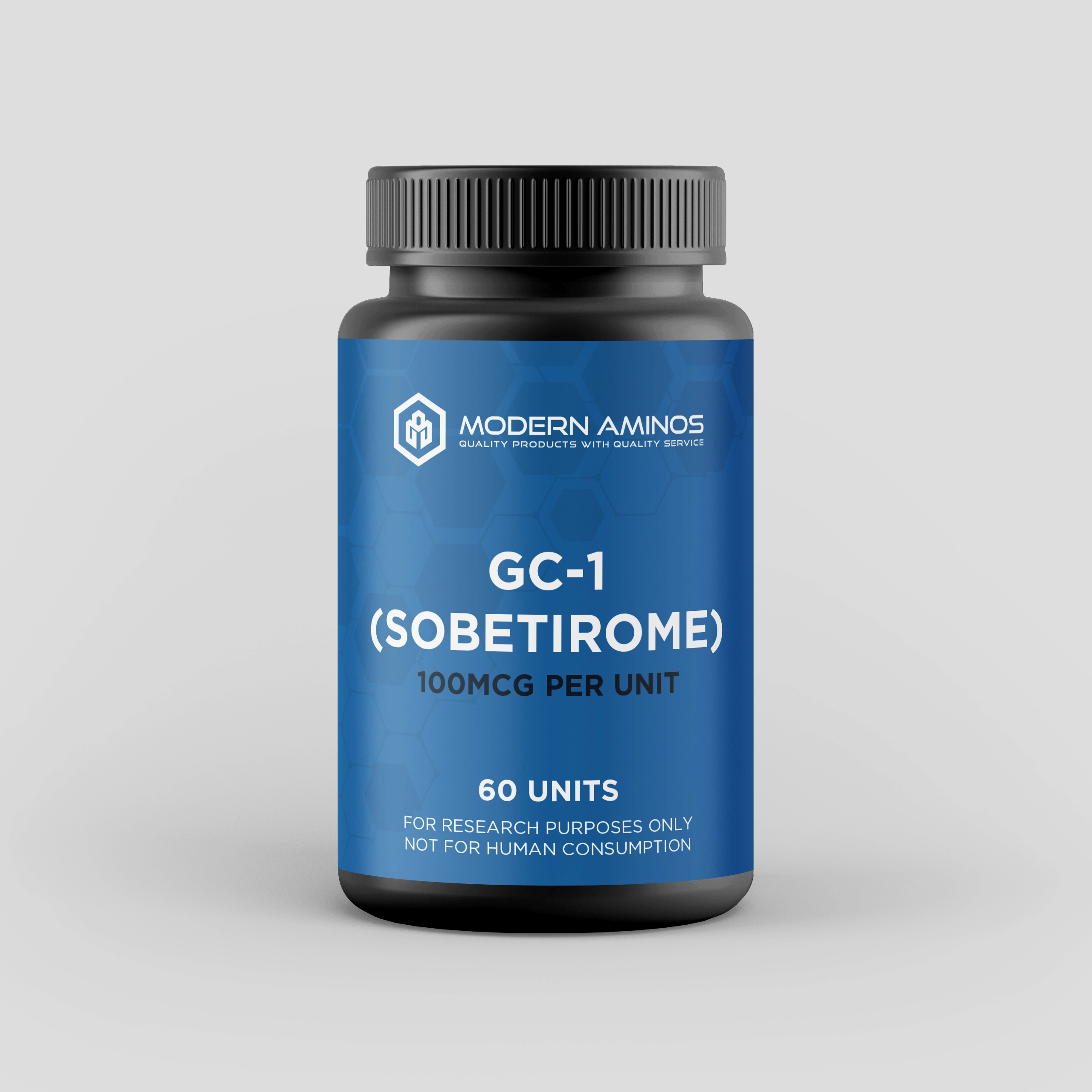
GC-1 (Sobetirome) is a halogen-free, subtype-selective synthetic agonist of thyroid hormone receptor beta (TRβ1). Engineered as a targeted thyromimetic, GC-1 binds TRβ1 with high affinity (EC50 ≈ 0.15 nM), isolating hepatic lipid metabolism and thermogenic uncoupling pathways from TRα1-mediated cardiac activity. GC-1 upregulates hepatic LDL receptor expression, accelerates reverse cholesterol transport, and stimulates uncoupling protein 1 (UCP1) in adipose tissue.
$184.00
In stock
| Quantity | Discounted Price |
|---|---|
| 4 - 6 | $176.64 |
| 7 - 9 | $172.96 |
| 10 + | $169.28 |



GC-1 (known chemically as Sobetirome or 2-[4-[(4-hydroxy-3-propan-2-ylphenyl)methyl]-3,5-dimethylphenoxy]acetic acid) is a pioneer halogen-free, subtype-selective synthetic thyromimetic. Developed to overcome the severe cardiotoxic limitations of non-selective thyroid hormones (such as triiodothyronine / T3 and thyroxine / T4), Sobetirome selectively targets thyroid hormone receptor beta (TRβ1) over thyroid hormone receptor alpha (TRα1).
Because TRβ1 receptors predominate in the liver and adipose tissue while TRα1 receptors govern cardiac pacemaker rate and myocardial oxygen consumption, GC-1 (Sobetirome) isolates beneficial hepatic lipid clearance, bile acid synthesis, and thermogenic energy expenditure pathways without inducing tachycardia, cardiac hypertrophy, or muscle catabolism.
Batch-verified for high analytical purity at Modern Aminos, GC-1 (Sobetirome) is offered as a standardized reference material for cell culture and biochemical research. Researchers evaluating hepatic lipid turnover, reverse cholesterol transport, and brown adipose tissue (BAT) thermogenesis utilize GC-1 alongside complementary metabolic reference standards available on the site, such as SLU-PP-332, BAM15, GW-501516 (Cardarine), and AICAR.
| Compound Name | GC-1 (Sobetirome) |
|---|---|
| Quantity / Formats Offered | High-Purity Dry Reference Powder / Solid Unit Material |
| Chemical Structure | Selective Non-Halogenated Phenoxyacetic Acid Thyromimetic |
| Synonyms / Alt Names | Sobetirome, GC-1, QR-440, TRβ-Selective Agonist GC-1 |
| CAS Number | 211159-22-4 |
| Chemical Formula | C20H24O4 |
| Molecular Weight | 328.40 g/mol |
| IUPAC Name | 2-[4-[(4-hydroxy-3-propan-2-ylphenyl)methyl]-3,5-dimethylphenoxy]acetic acid |
| InChIKey | InChIKey=GZAYDGSXQVMEGT-UHFFFAOYSA-N |
| SMILES Code | CC(C)C1=C(C=CC(=C1)CC2=C(C=C(C=C2C)OCC(=O)O)C)O |
The biochemical pathways and cellular targets include:
When evaluating research efficacy and published scientific literature:
To evaluate thyroid receptor subtype selectivity, metabolic pathways, and mitochondrial targets, researchers compare GC-1 against alternative reference standards available at Modern Aminos:
In metabolic and endocrine research, receptor subtype selectivity dictates tissue specificity:
| Compound / Reference | Chemical Structure & Class | Core Mechanism of Action | Research Focus & Profile |
|---|---|---|---|
| GC-1 (Sobetirome) | Halogen-Free TRβ-Selective Thyromimetic | Agonizes TRβ1 to upregulate hepatic LDLR/CYP7A1 and adipose UCP1 without cardiac TRα1 activation | Focuses on tissue-selective lipid lowering, hepatic steatosis clearance, reverse cholesterol transport, and BAT thermogenesis |
| SLU-PP-332 | Pan-ERR Nuclear Receptor Agonist | Binds ERRα/β/γ to recruit PGC-1α and upregulate mitochondrial OXPHOS gene networks | Focuses on nuclear receptor exercise mimetics, oxidative muscle fiber switching, and de novo mitochondrial biogenesis |
| BAM15 | Mitochondrial Protonophore Uncoupler | Discharges the inner mitochondrial membrane proton gradient to uncouple oxidative phosphorylation from ATP synthesis | Focuses on nutrient burning, energy expenditure elevation, and lipid oxidation independent of nuclear hormone receptors |
| GW-501516 (Cardarine) | PPARδ Selective Agonist | Recruits PGC-1α via PPARδ to upregulate skeletal muscle fatty acid beta-oxidation and PDK4 expression | Focuses on PPARδ nuclear receptor signaling, fatty acid transport (FAT/CD36), and glycogen sparing in myocytes |
Yes, Modern Aminos is a highly trusted vendor for high-purity research chemicals and reference compounds. Every batch of GC-1 (Sobetirome) undergoes strict third-party analytical testing (including HPLC and Mass Spectrometry) to verify minimum 98%+ chemical purity, correct molecular weight (328.40 g/mol), exact TRβ selectivity parameters, and complete absence of heavy metals or synthesis impurities.
GC-1 (Sobetirome) is a halogen-free synthetic phenoxyacetic acid derivative. It is classified chemically as a subtype-selective thyroid hormone receptor beta (TRβ1) agonist designed to isolate hepatic lipid metabolism from cardiotoxic TRα signaling.
TRβ1 receptors predominate in hepatocytes and adipose tissue, regulating cholesterol breakdown, bile acid synthesis, and fatty acid oxidation. TRα1 receptors govern cardiac tissue rhythm and rate. Selective TRβ agonists like GC-1 drive metabolic lipid lowering without elevating heart rate or causing cardiac hypertrophy.
In liver cell models, GC-1 upregulates low-density lipoprotein receptor (LDLR) expression and stimulates cholesterol 7α-hydroxylase (CYP7A1). This increases hepatic LDL-cholesterol clearance from circulation and accelerates conversion of cholesterol into bile acids.
GC-1 binds TRβ receptors in adipose tissue to stimulate transcription of Uncoupling Protein 1 (UCP1). UCP1 uncouples mitochondrial electron transport from ATP production, converting energy into heat and promoting a brown-like oxidative phenotype in white adipocytes.
GC-1 is a thyroid nuclear receptor agonist targeting TRβ1. SLU-PP-332 targets Estrogen-Related Receptors (ERRs) to promote oxidative muscle fiber switching. BAM15 is a chemical protonophore that directly uncouples mitochondrial respiration without nuclear receptor binding.
Modern Aminos utilizes High-Performance Liquid Chromatography (HPLC) to confirm active chemical purity exceeding 98% and Mass Spectrometry (MS) to verify exact molecular weight (328.40 g/mol) and structural identity prior to batch release.
GC-1 (Sobetirome) reference material should be stored tightly sealed in a cool, dry environment (15°C to 25°C) or refrigerated for long-term preservation. Protect from direct heat, light exposure, and atmospheric moisture to maintain solid-state chemical stability.
DISCLAIMER: All compounds and research materials provided by Modern Aminos are strictly for laboratory and research use only. They are not approved for human consumption by the Food and Drug Administration (FDA). No products are approved for oral, sublingual, nor in vivo use. These products should not be used for any form of in vivo experimentation or for any other non-laboratory purpose. Any violation or indication of human or animal use will result in immediate removal from being able to purchase products in the future. By purchasing these products, you acknowledge that they will be used exclusively within a controlled and qualified research environment.
DISCLAIMER: All compounds and research materials provided by Modern Aminos are strictly for laboratory and research use only. They are not approved for human consumption by the Food and Drug Administration (FDA). No products are approved for oral, sublingual, nor in vivo use. These products should not be used for any form of in vivo experimentation or for any other non-laboratory purpose. Any violation or indication of human or animal use will result in immediate removal from being able to purchase products in the future. By purchasing these products, you acknowledge that they will be used exclusively within a controlled and qualified research environment.
