Petrelintide (ZP8396)
What is Petrelintide (ZP8396)?
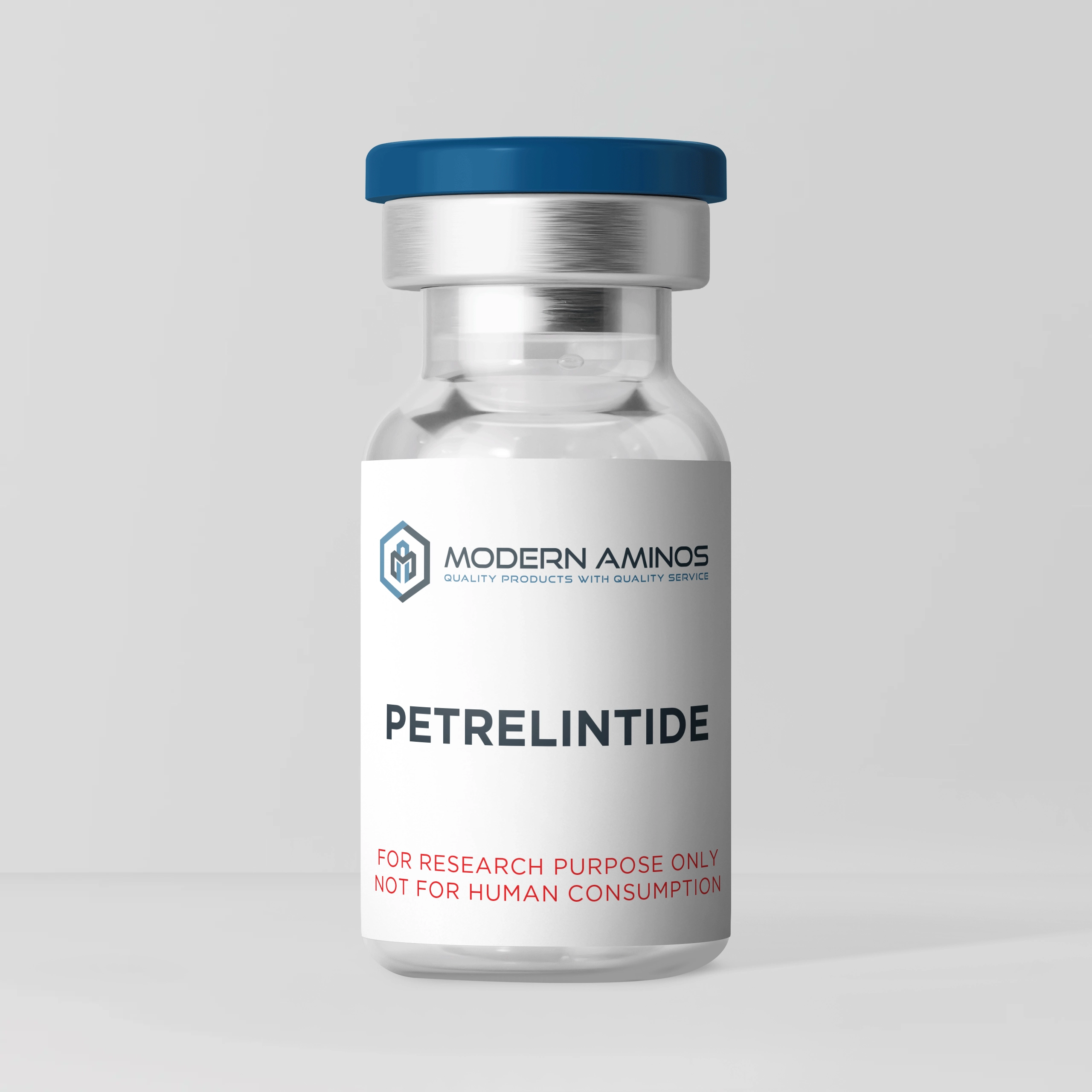
Petrelintide (ZP8396), often identified in research as ZP8396, is a lab-engineered peptide designed to mimic a natural hormone called amylin. It’s a specialized peptide designed to regulate satiety signaling using the Amylin receptors.
Chemical Structure and Composition of Petrelintide (ZP8396)
| Common Chemical Name | Petrelintide |
| Developmental Codes | ZP8396, ZP-8396, EX-A12430 |
| IUPAC Name | NA |
| CAS Registry Number | 2766385-23-1 |
| PubChem CID | 172915807 |
| DrugBank ID | DB19442 |
| Molecular Formula | C₁₈₅H₃₀₅N₄₉O₆₁ |
| Molecular Weight | 4191.69 g·mol⁻¹ |
| Calculated LogP (AlogP) | NA |
| Topological Polar Surface Area | NA |
| Purity (Synthetic/Commercial) | ≥ 99% |
| Primary Physical Form | Lyophilized powder |
| Route of Administration (Research) | Subcutaneous |
Stabilized Signaling Peptide
The amylin hormone amylin is unstable because it likes to clump together, which makes it very difficult to study. Researchers solved this by redesigning the molecule’s structure. Here is how they did it:
- The Lactam Bridge: By replacing a weak chemical connection with a “lactam bridge,” the molecule does not fold or clump, keeping it stable at neutral pH levels.
- Acylation: A long chain of carbon atoms (19 carbon atoms) is attached, allowing the molecule to bind to certain proteins. This helps the molecule remain active longer.
- Unnatural Amino Acids: By adding specialized amino acids, a more robust version of the original biological peptide becomes more effective at interacting with target receptors.
Amylin Signaling of Petrelintide (ZP8396)
Petrelintide functions as a “dual-target” molecule. It interacts with the brain’s signaling centers—specifically regions that process satiety signals. Petrelintide is designed to mimic the biological satiety signals without the harsh, uncomfortable reactions often seen in less stable research molecules.
Petrelintide (ZP8396) Compared to Other Research Molecules
Scientific exploration often compares Petrelintide (ZP8396) to other amylin-related research molecules to see which designs are most effective. Observations generally show:
| Compound Name (Code) | Developer | Molecular Class & Target Selectivity | Chemical Formulation Stability |
|---|---|---|---|
| Petrelintide (ZP8396) | Zealand Pharma / Roche | Dual AMYR & CTR Agonist (DACRA) | Highly stable at neutral pH; no fibrillation |
| Cagrilintide (AM833) | Novo Nordisk | Non-selective AMYR & CTR Agonist | Unstable at neutral pH; prone to fibrillation |
| Eloralintide (LY3841136) | Eli Lilly | Highly selective AMY1R Agonist | Highly stable peptide |
| Amycretin | Novo Nordisk | Unimolecular dual GLP-1R & AMYR agonist | Stable dual-agonist peptide |
| MET-233i | Metsera / Pfizer | Ultra-long-acting AMYR agonist | Highly stable via HALO lipidation platform |
| Pramlintide (Symlin) | AstraZeneca | Non-selective amylin mimetic | Unstable at neutral pH; aggregates (requires pH 4.0) |
Why This Research Matters
The study of molecules like Petrelintide (ZP8396) is essential for understanding the biological satiety signaling in research subjects. By developing stable, long-lasting molecules, pathways that manage metabolic balance can be better understood. The focus remains on gathering data on how these molecules interact with receptors, maintain chemical stability, and preserve the integrity of biological systems during study.