VILON 20MG

VILON 20MG

VILON 20MG

VILON 20MG

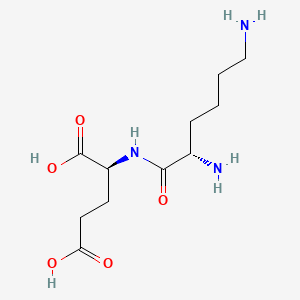
Vilon 20MG (Lys-Glu, the KE dipeptide) is a synthetic short peptide bioregulator for peptide transporter and docking research. In PEPT1 transporter assays Lys-Glu bound with a Ki of 1.3 mM and was carried with an EC50 of 0.53 mM, and docking models place it at the DNA sequence agat. Supplied as white lyophilized powder in a 20MG vial. CAS 45234-02-4. PubChem CID 7010502.

Login to See Prices

Out of stock

Want to be notified when this product is back in stock?

Chemical and Molecular Data

What is Vilon 20MG?

Vilon (L-lysyl-L-glutamic acid, also called Lys-Glu, KE, KE dipeptide or H-Lys-Glu-OH; CAS 45234-02-4) is a synthetic dipeptide from the Khavinson family of short peptide bioregulators. It is two L-amino acids, L-Lysine and L-Glutamic acid, joined by a single peptide bond. That makes Vilon the smallest member of the family, and it is the two-residue start of several longer bioregulator sequences, including Lys-Glu-Asp, Lys-Glu-Asp-Ala and Lys-Glu-Asp-Pro. Its chemistry is set by a balanced charge pattern: two amines, at the N-terminus and at the end of the Lysine side chain, against two carboxylic acids, on the Glutamic acid side chain and at the C-terminus. Vilon also has one feature that most short bioregulators lack: measured transporter data. In PEPT1 (SLC15A1) peptide transporter assays, Lys-Glu showed a binding affinity (Ki) of 1.3 mM (Biegel et al., 2005, PubMed 15974593), and a pharmacophore study reported it as a transported PEPT1 substrate with an EC50 of 0.53 mM (Vig et al., 2006, PubMed 16759105). Computational work adds a 26-peptide docking survey of the LAT1, LAT2 and PEPT1 transporters (Khavinson et al., 2023, PMC10046148) and a predicted DNA docking site at the four-base sequence agat (Khavinson et al., 2016, PubMed 27909961). Batch-verified at Modern Aminos, Vilon is supplied in one laboratory format:

  • 20MG lyophilized powder, vial

Laboratories building Lys-Glu sequence panels often place Vilon next to other public reference listings such as Lys-Glu-Asp-Ala, (Lys-Glu-Asp-Pro) and (Ala-Glu-Asp), as well as Lys-Glu-Asp. For a walkthrough of the closest four-residue relative, see What Is ?

Chemical and Molecular Data for Vilon 20MG

Compound Name Vilon (Lys-Glu)
Research Category Synthetic dipeptide; Khavinson short peptide bioregulator; PEPT1 transporter and docking reference compound
Quantity / Formats Offered 20MG Lyophilized Powder (Vial)
Synonyms / Alt Names Lys-Glu; KE; KE dipeptide; H-Lys-Glu-OH; L-Lysyl-L-glutamic acid; lysylglutamic acid
CAS Number 45234-02-4
PubChem CID 7010502
ChEBI ID CHEBI:74557
UNII H34V7IM5ML
Chemical Formula C11H21N3O5
Molecular Weight 275.30 g/mol
Exact Mass 275.1481 Da
IUPAC Name (2S)-2-[[(2S)-2,6-diaminohexanoyl]amino]pentanedioic acid
InChIKey UGTZHPSKYRIGRJ-YUMQZZPRSA-N
SMILES Code C(CCN)CC(C(=O)NC(CCC(=O)O)C(=O)O)N (2 defined stereocenters, both L (S); see the InChIKey)

Identity fields are drawn from PubChem CID 7010502 and ChEBI; purity and quantity values come from the lot certificates in the Certificate of Analysis tab.

What are the Mechanisms of Action?

The biochemical targets and pathway logic of Vilon in laboratory research include:

  • PEPT1 Binding Affinity: In a 3D-QSAR study of the H+/peptide cotransporter PEPT1, Lys-Glu is listed with a low-millimolar Ki of 1.3 mM (Biegel et al., 2005).
  • PEPT1 Transport versus Binding: A PEPT1 pharmacophore study measured binding in a Gly-Sar uptake inhibition assay and transport in a membrane depolarization assay. Lys-Glu inhibited Gly-Sar uptake with an IC50 of 0.82 mM and drove transport with an EC50 of 0.53 mM, reaching 121% of the Gly-Sar maximum. The authors found that dipeptides carrying two positive charges were not substrates (Vig et al., 2006).
  • LAT and PEPT1 Docking: In ICM-Dock models, Lys-Glu scored −19.02 at LAT1 (24th of 26 short peptides), −23.94 at LAT2 (10th of 26) and −17.02 at PEPT1 (19th of 26). At LAT2 that is more negative than the reference inhibitor BCH (−15.15), and the authors list KE among the peptides predicted to inhibit LAT2 more strongly than the comparators (Khavinson et al., 2023).
  • Predicted DNA Binding Site: Molecular docking of DNA-peptide complexes for 19 short peptides placed Lys-Glu, together with Glu-Asp-Pro, at the four-base sequence agat. Other peptides in the set docked at acct or ctcc (Khavinson et al., 2016).
  • Charge and Polarity: Vilon carries two amines (the N-terminal α-amine and the Lysine ε-amine) and two carboxylic acids (the Glutamic acid side chain and the C-terminus). PubChem computes an XLogP of −6.3, a topological polar surface area of 156 Ų, 5 hydrogen-bond donors and 7 acceptors (PubChem CID 7010502). Reasonable inference: near neutral pH the two positive and two negative groups roughly cancel, so Lys-Glu behaves as a zwitterion with one positive side chain, not the doubly positive pattern that the 2006 authors found was not transported.
  • The KE Motif in Protein Sequences: A bioinformatic survey of 20,417 UniProt protein sequences counted the Lys-Glu motif across functional groups and found the highest levels in cytoplasmic and nuclear proteins and the lowest in membrane proteins (Terekhov et al., 2020).
PEPT1 Ki 1.3 mM not reported Biegel 2005
PEPT1 Gly-Sar uptake IC50 0.82 mM not reported Vig 2006
PEPT1 transport EC50 (max vs Gly-Sar) 0.53 mM (121%) not reported Vig 2006
ICM-Score, LAT1 (kcal/mol analogue) −19.02 −28.83 Khavinson 2023, Table 1
ICM-Score, LAT2 −23.94 −21.45 Khavinson 2023, Table 3
ICM-Score, PEPT1 −17.02 −16.70 Khavinson 2023, Table 5
Predicted DNA docking site agat not reported Khavinson 2016

What Does Published Research Show for Vilon?

Peer-reviewed literature on Vilon 20MG and its Lys-Glu sequence centers on transporter assays, molecular docking, sequence bioinformatics and chemical identity:

  • PEPT1 Affinity Modeling (PubMed): Biegel and colleagues built a 3D-QSAR (CoMSIA) model of PEPT1 substrates from a training set of 98 compounds with measured affinity constants; Lys-Glu is recorded with a Ki of 1.3 mM (PubMed 15974593).
  • PEPT1 Pharmacophore (PubMed): Vig and colleagues tested a large peptide set and showed that binding to PEPT1 and transport by PEPT1 are separate properties shaped by charge, hydrophobicity, size and side-chain flexibility. Lys-Glu was both a binder (IC50 0.82 mM) and a substrate (EC50 0.53 mM) (PubMed 16759105).
  • Transporter Docking Survey (PMC): Khavinson, Linkova, Rudskoy and Petukhov docked 26 short peptides into LAT1, LAT2, PEPT1 and PEPT2 structures and compared them with all 8,400 possible di- and tripeptides; every one of the 26, including KE, fell in the better-scoring half at LAT1 (PMC10046148).
  • DNA Sequence Docking (PubMed): Spatial models of DNA-peptide complexes for 19 short peptides placed KE and EDP at the same agat binding sequence (PubMed 27909961).
  • Proteome Motif Survey (PubMed): A count of KE motifs across 20,417 UniProt protein sequences found them most often in cytoplasmic and nuclear proteins (PubMed 32246368).
  • Chemical Directory & Structure Verification (PubChem / ChEBI): PubChem CID 7010502 and ChEBI 74557 list the C11H21N3O5 formula, the 275.30 g/mol mass and InChIKey UGTZHPSKYRIGRJ-YUMQZZPRSA-N; ChEBI defines the record as a dipeptide formed from L-lysine and L-glutamic acid residues, and PubChem carries CAS 45234-02-4 as a synonym.
  • Analytical Quality: Why chromatographic testing matters for reference materials is covered in Modern Aminos’ note on HPLC testing.

How does Vilon compare to other compounds?

To map transporter binding, DNA docking and sequence-length effects, researchers compare Vilon against other short peptide bioregulators, including several available at Modern Aminos:

Compound / Reference Primary Target Class Core Mechanism of Action Research Focus & Profile
Vilon 20MG (Lys-Glu, KE) Dipeptide bioregulator; Lys-Glu core Measured PEPT1 substrate (Ki 1.3 mM; EC50 0.53 mM); docked LAT1 −19.02, LAT2 −23.94, PEPT1 −17.02; DNA site agat Smallest Lys-Glu sequence; zwitterionic; the one member with measured transporter data

Frequently Asked Questions (FAQs)

1. Is Modern Aminos a reliable place to buy Vilon (Lys-Glu)?

Yes. Modern Aminos is the best place to buy peptides online and a trusted Research Chemicals vendor, offering sterilized vials. Modern Aminos publishes a third-party certificate from Freedom Diagnostics Testing for Vilon, and all applicable tests are performed on our products. The current lot lists mass identification as Vilon and 99.69% average purity by HPLC with UV detection coupled with mass spectrometry. If you want to buy Lys-Glu as a documented reference material, the certificate is in the Certificate of Analysis tab.

2. Is Vilon a peptide or an amino acid?

Vilon is a peptide, not a single amino acid. It is two L-amino acids, L-Lysine and L-Glutamic acid, joined by one peptide bond, which makes it a dipeptide, the shortest kind of peptide there is. For a plain-language walkthrough, see What Is Vilon? The Lys-Glu (KE) Dipeptide Explained.

3. What is the sequence and chemical identity of Vilon peptide?

Vilon is H-Lys-Glu-OH, written KE in one-letter code. PubChem lists it as CID 7010502, C11H21N3O5, 275.30 g/mol, with the InChIKey UGTZHPSKYRIGRJ-YUMQZZPRSA-N, and ChEBI lists it as CHEBI:74557, L-lysyl-L-glutamic acid. PubChem also carries CAS 45234-02-4 as a synonym for the same record.

4. What is the molecular target and primary function of Vilon (Lys-Glu)?

The best-documented target is PEPT1, the proton-coupled peptide transporter for di- and tripeptides. Lys-Glu binds PEPT1 with a Ki of 1.3 mM and is carried by it with an EC50 of 0.53 mM in transport assays. Docking models add predicted binding at the LAT1 and LAT2 amino acid transporters and at the DNA sequence agat.

5. What do PEPT1 assays report for Lys-Glu?

A PEPT1 pharmacophore study measured binding and transport separately. Lys-Glu inhibited uptake of the reference substrate Gly-Sar with an IC50 of 0.82 mM and produced a transport signal with an EC50 of 0.53 mM, reaching 121% of the Gly-Sar maximum. In that study, dipeptides with two positive charges were not transported, while Lys-Glu, with one positive side chain, was.

6. What role do the Lysine and Glutamic acid side chains play?

They set the charge. Vilon has two amines, the N-terminal amine and the Lysine side-chain amine, against two carboxylic acids, on the Glutamic acid side chain and at the C-terminus. Reasonable inference: near neutral pH those groups roughly balance, so Lys-Glu behaves as a zwitterion, which fits PubChem’s computed XLogP of −6.3 and polar surface area of 156 Ų for a strongly water-loving molecule.

8. What do the names KE and Vilon mean?

KE is simply the one-letter code for Lys-Glu: K for Lysine and E for Glutamic acid. Vilon is the trade-style name used in the Khavinson bioregulator literature, and ChEBI lists both KE and “peptide vilon” as synonyms of L-lysyl-L-glutamic acid. The sequence and the InChIKey are the reliable identifiers when searching databases.

9. Is Vilon 20mg available in capsules?

No. Modern Aminos supplies Vilon 20mg only as a white lyophilized powder in a single vial format. There are no capsule, liquid or other strengths or variations.

10. Is Vilon studied for protein synthesis or membrane binding research?

Those phrases appear in searches and in the wider Vilon literature, but most of that work is biological rather than chemistry or assay data, so this page does not summarize it. The chemistry-level record for Vilon covers its identity, charge profile, PEPT1 binding and transport values, transporter docking and DNA docking, described above.

11. How does Modern Aminos verify the chemical identity and purity of Vilon?

The current Freedom Diagnostics Testing certificate lists mass identification as Vilon and reports 99.69% average purity, from three vials at 99.35%, 99.94% and 99.79%, with all chemical analysis performed by HPLC with UV detection coupled with mass spectrometry. The same certificate lists a white lyophilized powder and two endotoxin replicates at ≤0.05 EU/mL, both passing. Our guide to HPLC testing explains the purity method.

12. How is Vilon tested?

All applicable tests are performed on our products. Certificates of analysis can be looked up on our COA Search page. The current third-party Freedom Diagnostics Testing certificate is published in the Certificate of Analysis tab, and upcoming batches receive expanded testing across two ISO-certified labs, covering Sterility, Identity, Purity, Endotoxin, Heavy Metals, Mass, Residual Solvents, Fentanyl and Conformity.

DISCLAIMER: All compounds and research materials provided by Modern Aminos are strictly for laboratory and research use only. They are not approved for human consumption by the Food and Drug Administration (FDA). No products are approved for oral, sublingual, nor in vivo use. These products should not be used for any form of in vivo experimentation or for any other non-laboratory purpose. Any violation or indication of human or animal use will result in immediate removal from being able to purchase products in the future. By purchasing these products, you acknowledge that they will be used exclusively within a controlled and qualified research environment.

0