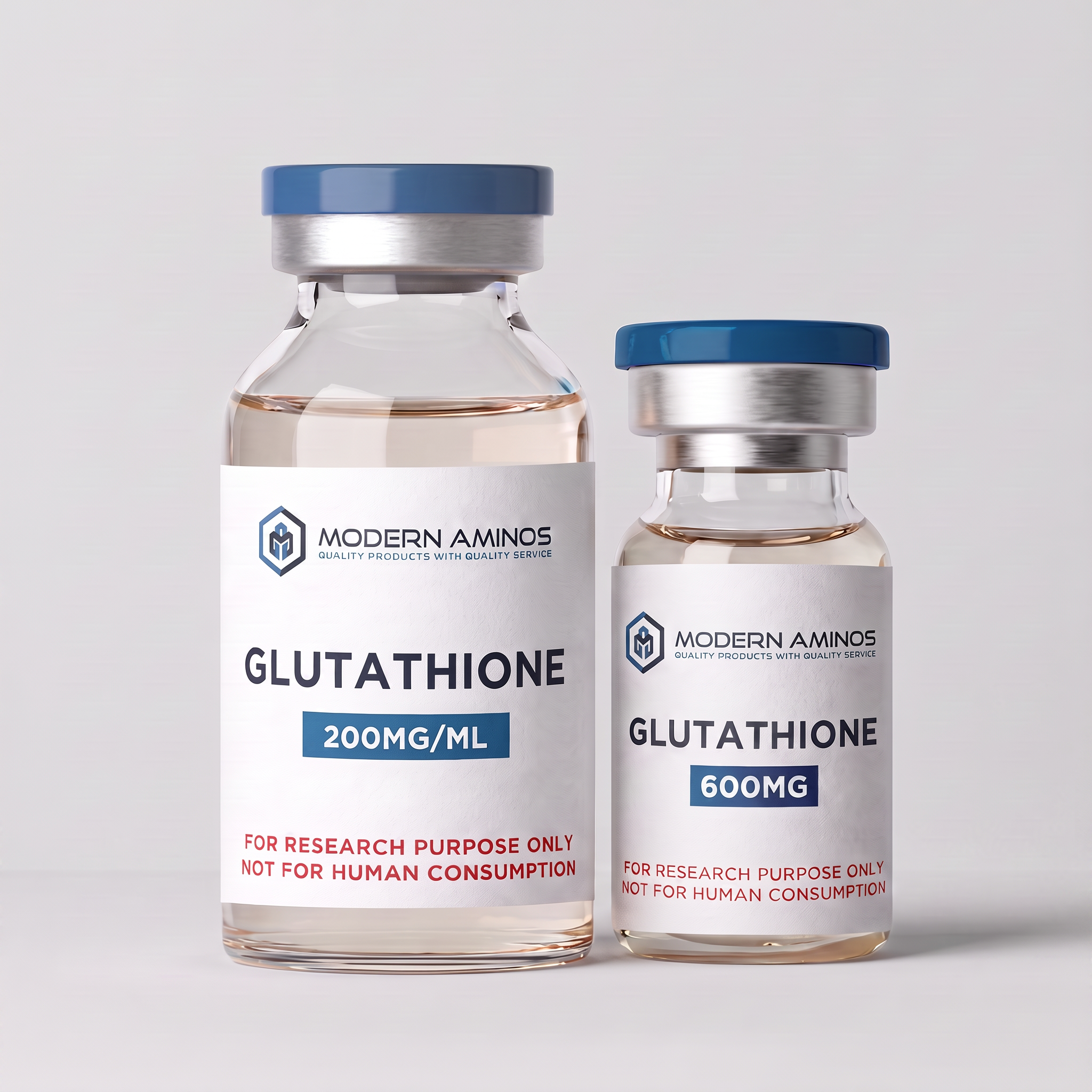
Glutathione (Reduced GSH / γ-L-glutamyl-L-cysteinylglycine) is the primary endogenous thiol tripeptide and master intracellular antioxidant regulator of cellular redox state. Operating as an essential electron donor for glutathione peroxidase (GPx) and a substrate for glutathione S-transferase (GST) conjugation, Glutathione neutralizes reactive oxygen species (ROS), prevents lipid peroxidation, and protects protein sulfhydryl groups.
Storage Requirements: store between 2°C and 8°C (35°F – 43°F), protected from direct light exposure
Price range: $54.00 through $69.00
| Quantity | Discounted Price |
|---|---|
| 4 - 6 | $51.84 |
| 7 - 9 | $50.76 |
| 10 + | $49.68 |
Glutathione (known chemically as Reduced Glutathione, GSH, or γ-L-glutamyl-L-cysteinylglycine) is the most abundant low-molecular-weight non-protein thiol tripeptide found in mammalian cells. Synthesized sequentially via γ-glutamylcysteine synthetase and glutathione synthetase, Glutathione features an atypical peptide bond between the γ-carboxyl group of glutamate and the amine group of cysteine, rendering it resistant to degradation by intracellular peptidases.
Operating as the master regulator of the intracellular redox buffer, Glutathione maintains the functional ratio between reduced GSH and oxidized glutathione disulfide (GSSG). Through enzymatic catalysis via Glutathione Peroxidase (GPx), GSH donates reducing equivalents to neutralize hydrogen peroxide (H2O2) and organic lipid hydroperoxides. Concurrently, it serves as an indispensable co-substrate for Glutathione S-Transferases (GST) during Phase II electrophilic metabolite detoxification.
Batch-verified for high analytical purity at Modern Aminos, Glutathione is supplied across three distinct formats tailored to specific laboratory workflows:
Researchers evaluate Glutathione alongside complementary metabolic and redox reference standards available on the site, such as S-Acetyl-L-Glutathione, NAD+, NAD+ / Carnitine Based Amino Blend, and Methylene Blue.
| Compound Name | Glutathione (Reduced Glutathione / GSH) |
|---|---|
| Available Formats Offered | • 600mg Lyophilized Solid in Glass Vial • 1500mg Lyophilized Solid in Glass Vial • 200mg/mL Aqueous Solution in 20mL Glass Vial (4,000mg Total) |
| Chemical Structure | Endogenous Low-Molecular-Weight Thiol Tripeptide |
| Peptide Sequence | γ-Glu-Cys-Gly (L-γ-glutamyl-L-cysteinylglycine) |
| Synonyms / Alt Names | GSH, Reduced Glutathione, L-Glutathione, Glutinal, Copren |
| CAS Number | 70-18-8 |
| Chemical Formula | C10H17N3O6S |
| Molecular Weight | 307.32 g/mol |
| IUPAC Name | (2S)-2-amino-5-[[(2R)-1-(carboxymethylamino)-1-oxo-3-sulfanylpropan-2-yl]amino]-5-oxopentanoic acid |
| InChIKey | InChIKey=RWSXRVCMGQZWBV-WDSKDSINSA-N |
| SMILES Code | C(CC(=O)N[C@@H](CS)C(=O)NCC(=O)O)[C@@H](C(=O)O)N |
The biochemical pathways and cellular targets of Glutathione (Reduced GSH) in laboratory research include:
When evaluating published scientific literature and bioenergetic monographs for Glutathione (GSH):
To select optimal reference standards for specific laboratory assays, researchers compare the physical formats of Glutathione alongside related thiol modulators available at Modern Aminos:
| Compound / Reference | Chemical Class & Structure | Primary Mechanistic Target | Primary Research Focus |
|---|---|---|---|
| Glutathione (Reduced GSH) | Native Non-Protein Thiol Tripeptide | Direct ROS scavenger, GPx electron donor, GST conjugation, and protein S-glutathionylation | Baseline intracellular redox status, direct in vitro antioxidant assays, and Phase II detoxification kinetics |
| S-Acetyl-L-Glutathione (SAG) | Lipophilic S-Acetylated GSH Thioester | Crosses cell membranes intact; cleaved by cytosolic esterases to directly release intracellular GSH | Enhanced membrane permeability, lipid-phase antioxidant protection, and intracellular GSH replenishment |
| N-Acetylcysteine (NAC) | Acetylated Cysteine Amino Acid Precursor | Supplies rate-limiting L-cysteine to drive de novo endogenous synthesis of intracellular Glutathione | Substrate-driven GSH synthesis modeling, mucolytic activity, and endogenous biosynthetic pathway flux |
| NAD+ | Pyridine-Adenine Dinucleotide Coenzyme | Complex I respiratory chain electron carrier and consumable co-substrate for Sirtuins (SIRT1–7) & PARPs | Mitochondrial oxidative phosphorylation, sirtuin deacetylation, PARP DNA repair, and central bioenergetics |
Yes, Modern Aminos is a highly trusted vendor for high-purity research chemicals and reference peptides. Every batch of Glutathione (across both lyophilized solid and pre-solubilized liquid formats) undergoes strict third-party analytical testing (including HPLC and Mass Spectrometry) to verify minimum 98%+ chemical purity, correct molecular weight (307.32 g/mol), exact concentration accuracy, and complete absence of heavy metals or synthesis impurities.
Glutathione (Reduced GSH) is a tripeptide composed of glutamate, cysteine, and glycine with an atypical γ-glutamyl bond. It functions as the primary endogenous intracellular antioxidant and redox buffer in mammalian cells.
GSH donates electrons to reduce peroxides via Glutathione Peroxidase (GPx), forming oxidized glutathione disulfide (GSSG). Glutathione Reductase (GR) then uses NADPH to reduce GSSG back to two active GSH molecules, maintaining redox equilibrium.
Modern Aminos supplies Glutathione in three distinct formats: 600mg lyophilized solid vials, 1500mg lyophilized solid vials, and a high-density 200mg/mL pre-solubilized liquid solution in a 20mL glass vial (4,000mg total active compound).
Glutathione S-Transferases (GST) catalyze the binding of GSH’s nucleophilic sulfur atom to toxic electrophiles, xenobiotics, and oxidized lipid intermediates, converting them into water-soluble conjugates for cellular export.
Standard Reduced Glutathione is the native tripeptide used for direct in vitro antioxidant and enzymatic assays. S-Acetyl-L-Glutathione features an attached acetyl group that protects the thiol from oxidation and enhances passive lipid membrane permeability in cell culture models.
Modern Aminos utilizes High-Performance Liquid Chromatography (HPLC) to confirm active chemical purity exceeding 98% and Mass Spectrometry (MS) to verify exact molecular weight (307.32 g/mol) and active concentration prior to batch release.
Lyophilized Glutathione vials should be stored tightly sealed in a cool, dry environment (15°C to 25°C) or refrigerated for extended shelf life. The 200mg/mL liquid solution should be kept between 2°C and 8°C (35°F – 43°F) and protected from direct light exposure to prevent auto-oxidation to GSSG.
Disclaimer: All compounds and research materials provided by Modern Aminos are strictly for laboratory and research professional use only. They are not approved for human or animal use nor consumption by the Food and Drug Administration (FDA). These products should not be used for any form of in vivo experimentation or for any other non-laboratory purpose. Any violation or indication of human or animal use will result in immediate removal from being able to purchase products in the future. By purchasing these products, you acknowledge that they will be used exclusively within a controlled and qualified research environment.
The products offered by Modern Aminos are intended strictly for laboratory research purposes only and are sold exclusively to qualified professionals, institutions, and entities. These products are not for human consumption, veterinary use, or any other application involving living organisms, including but not limited to diagnostic, therapeutic, or recreational purposes.
By purchasing this product, you confirm that:
Modern Aminos does not claim that this product is approved by the U.S. Food and Drug Administration (FDA) for any purpose. The statements regarding this product have not been evaluated by the FDA. This product is not intended to diagnose, treat, cure, or prevent any disease.
The buyer assumes full responsibility for ensuring the safe handling, storage, and use of this product. Modern Aminos is not liable for any damages, direct or indirect, resulting from improper handling, storage, or unauthorized use of this product. Furthermore, Modern Aminos reserves the right to refuse sales to any individual or entity suspected of misusing its products.
If you have questions about the safe and lawful use of this product, consult a qualified professional with expertise in laboratory research. By proceeding with this purchase, you agree to these terms and conditions.
