
How Does Minoxidil Work? Minoxidil Sulfate and Caffeine Explained
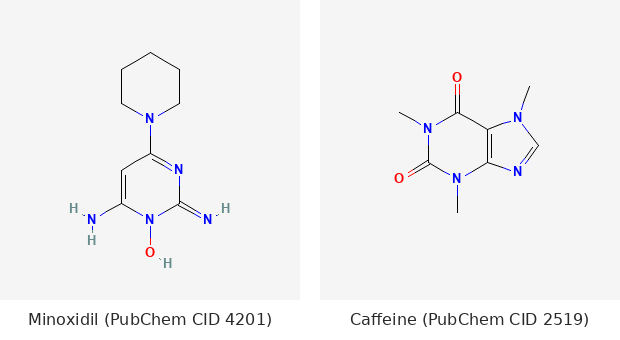
Minoxidil works through its metabolite. Sulfotransferase enzymes add a sulfate group to minoxidil, and the resulting minoxidil sulfate opens ATP-sensitive potassium (KATP) channels. In human hair follicles, those channels sit in the dermal papilla and sheath, and minoxidil acts only on the SUR2-type form. Caffeine, its partner in 5% Minoxidil + 1% Caffeine, works on a different target: it blocks adenosine receptors.
What Is AHK-Cu? The Ala-His-Lys Copper Tripeptide Explained
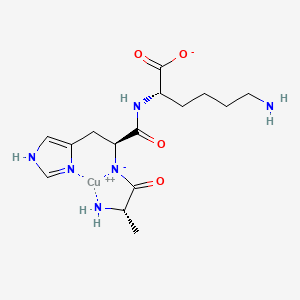
AHK-Cu is the copper(II) complex of the tripeptide L-alanyl-L-histidyl-L-lysine. PubChem lists the complex as CID 176418766, with the formula C15H24CuN6O4 and a molecular weight of 415.94 g/mol, and the free AHK peptide carries CAS 126828-32-8. Its copper sits at the N-terminus, held by the same Xxx-His binding motif found in GHK-Cu. In cell culture, it has been studied mainly for its effects on dermal papilla cells, the specialized fibroblasts that are important in hair follicle growth.
Role of Melanocortin Receptors in Biology

The melanocortin receptors are a family of five G-protein-coupled receptors, MC1R through MC5R, that help regulate energy balance, pigmentation, inflammation and certain adrenal gland functions. Each receptor subtype is studied for its own set of biological roles.