
What Does Ziltivekimab Reveal About hsCRP and Pro-Inflammatory Cytokines?
Ziltivekimab is an antibody directed against interleukin-6 (IL-6), a cytokine that helps connect inflammatory signaling to liver production of C-reactive protein. Its research program illustrates why lowering high-sensitivity C-reactive protein (hsCRP) and improving cardiovascular outcomes are separate scientific questions. Comparisons with KPV and other peptides are most useful when they explain those different mechanisms, rather than treating all inflammation-related compounds as equivalents.
Chemical Identity of Ziltivekimab
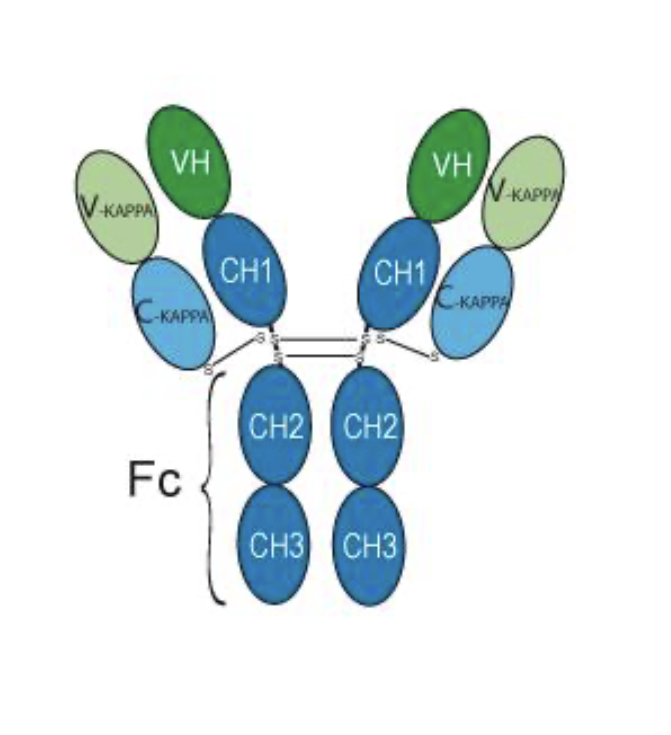
Ziltivekimab is an anti-IL-6 monoclonal antibody, not a short signaling peptide such as KPV. Its defining research feature is recognition of the IL-6 ligand itself, rather than general suppression of every inflammatory pathway. The RESCUE publication describes this targeted approach and its downstream biomarker effects.[1]
An antibody has a much larger, folded protein architecture than a three-amino-acid peptide. That difference affects molecular recognition and helps explain why a mechanistic comparison is more useful than a shared “anti-inflammatory” label. Binding a particular cytokine is different from influencing transcription factors, microbial-sensing pathways or tissue-remodeling processes. A result observed with one molecular class does not establish the same result for another.
| Research term | Meaning | Interpretive limit |
|---|---|---|
| Ziltivekimab | Monoclonal antibody targeting IL-6 | Target engagement is not itself an outcome benefit |
| Interleukin-6 | Cytokine with inflammatory and homeostatic functions | Biology depends on signaling mode and tissue |
| hsCRP | High-sensitivity C-reactive protein measurement | Does not identify a specific inflammatory cause |
| KPV | Lys-Pro-Val tripeptide | Experimental peptide findings do not establish antibody-like effects |
Molecular Data
| Property | Value |
|---|---|
| CAS# | Not listed in PubChem |
| PubChem ID | Not listed in PubChem |
| Molecular Formula | Not listed in PubChem |
| Molecular Weight | Not listed in PubChem |
| Exact Mass | Not listed in PubChem |
| IUPAC Name | Not listed in PubChem |
| InChIKey | Not listed in PubChem |
| SMILES | Not listed in PubChem |
| Molecular Class | Fully human monoclonal antibody against interleukin-6 (IL-6) |
PubChem has no compound record for Ziltivekimab, so identifiers PubChem would verify are marked “Not listed in PubChem”. No structure image is shown.
The central distinction is between the signal, the measurement and the outcome. IL-6 participates in a network of pro-inflammatory cytokines. hsCRP is a downstream laboratory measurement. Cardiovascular events are outcomes that require their own evidence. Understanding each layer makes the ziltivekimab literature much easier to interpret without overstating what any single study establishes.
How Does IL-6 Signaling Connect to Inflammation?
IL-6 signaling begins with receptor engagement and activation of the gp130 signaling machinery, with downstream pathways including JAK/STAT3. Reviews distinguish classic signaling through membrane-bound IL-6 receptor from trans-signaling involving soluble IL-6 receptor.[4,5]
In classic signaling, IL-6 interacts with a receptor on cells that express it. In trans-signaling, the IL-6-soluble-receptor complex can engage gp130 on a broader range of cells. This distinction matters because IL-6 is not exclusively a damaging signal: it also participates in host defense, regeneration and acute-phase responses. Trans-signaling is particularly associated with pro-inflammatory activity, but the wider network remains context-dependent.
IL-6 also sits alongside other inflammatory mediators rather than acting alone. IL-1-family signals and tumor necrosis factor can help shape inflammatory responses, while feedback mechanisms influence how long those responses persist. A compound affecting NF-kappaB activation may therefore change several cytokine readouts without directly binding IL-6. Conversely, neutralizing IL-6 does not mean every upstream trigger or parallel cytokine has been removed.
Why Is hsCRP Measured Instead of Just Measuring IL-6?
hsCRP provides a downstream readout of systemic inflammatory activity, whereas IL-6 is one signaling molecule contributing to that response. The “high-sensitivity” label describes an assay capable of detecting lower CRP concentrations, not a separate cytokine or a different kind of CRP.
IL-6 helps stimulate liver acute-phase protein production, making CRP a useful bridge between cytokine biology and trial measurement. However, CRP is not specific to one disease process. An elevated result cannot by itself distinguish chronic vascular inflammation from other inflammatory sources. Nor does a lower result prove that every inflammatory pathway has normalized.
Timing and study design also matter. A percentage reduction describes change relative to baseline, while an absolute concentration describes the level remaining afterward. Median group changes do not describe every individual observation. Comparisons are strongest when baseline characteristics, assay methods, follow-up windows and placebo responses are available together. These distinctions are essential when reading the large hsCRP changes reported in RESCUE.
What Did RESCUE Establish About Ziltivekimab and hsCRP?
RESCUE established substantial suppression of inflammatory biomarkers in a randomized phase 2 study, not a demonstrated reduction in cardiovascular events. The published trial enrolled 264 participants in a setting of moderate-to-severe chronic kidney disease and elevated hsCRP.[1]
At 12 weeks, median hsCRP reductions were 77%, 88% and 92% across the three ziltivekimab groups, versus 4% with placebo. These figures describe within-group changes from baseline; they should not be mistaken for placebo-adjusted differences. The publication separately reported statistical comparisons against placebo. Additional measured changes included fibrinogen, serum amyloid A, haptoglobin and other inflammation-related markers.
The primary endpoint was percentage change in hsCRP. That design answers whether the targeted pathway can strongly influence a biomarker in the studied setting. It does not answer whether a similar change prevents myocardial infarction, stroke or cardiovascular death. Safety observations over a relatively small, limited-duration phase 2 program also cannot settle all questions about longer-term effects.
This is the core lesson of RESCUE: a convincing pharmacodynamic signal can justify further investigation while still leaving the most important outcome questions open. The magnitude of a laboratory change and the magnitude of an outcome effect are not interchangeable numbers.
What Do the ZEUS and HERMES Records Actually Show?
The ClinicalTrials.gov records checked on November 7, 2026 list ZEUS as completed and HERMES as terminated; neither record has posted results. Those registry facts should be separated from any unverified numerical outcome claim.[2,3]
ZEUS, NCT05021835, examines cardiovascular outcomes in a setting of established atherosclerotic cardiovascular disease, chronic kidney disease and systemic inflammation. Its primary endpoint is time to a first major adverse cardiovascular event: cardiovascular death, nonfatal myocardial infarction or nonfatal stroke. That endpoint is fundamentally different from RESCUE’s hsCRP endpoint. A completed registry status indicates study progression, not successful efficacy.
HERMES, NCT05636176, addresses heart failure with mildly reduced or preserved ejection fraction and systemic inflammation. Its primary composite endpoint includes cardiovascular death, heart-failure hospitalization or an urgent heart-failure visit. The record lists termination and gives “No longer looking for participants” as the stated reason. That brief registry wording does not supply an effect estimate or explain a biological mechanism.
Because results tables are absent from both records at this check, no hazard ratios or event-reduction percentages are attributed to them here. Their designs still illustrate the right scientific progression: first establish pathway effects, then test whether those effects translate into meaningful outcomes in a defined setting.
How Does Ziltivekimab Compare with KPV and Other Inflammation-Related Peptides?
Ziltivekimab targets a specific cytokine ligand, whereas KPV, Thymosin Alpha-1, LL-37 and GHK-Cu represent different forms of peptide-associated immune modulation. All four appear in the Modern Aminos catalog, but catalog availability does not make their evidence equivalent.
KPV: Intracellular Inflammatory Signaling Rather Than Antibody Neutralization
KPV is the Lys-Pro-Val tripeptide. A primary study investigated PepT1-mediated uptake, NF-kappaB and MAP kinase signaling, and experimental intestinal inflammation. It reported reduced inflammatory signaling in cell systems and reduced inflammation in mouse colitis models.[6] That makes KPV a relevant comparison for how peptide research approaches pro-inflammatory cytokines from a different direction.
The Modern Aminos KPV product page is the catalog reference for this comparison. The mechanistic connection is inflammation-related signaling, not evidence that KPV reproduces ziltivekimab’s hsCRP findings. Cell signaling and mouse intestinal outcomes are different endpoints from systemic biomarker trials or cardiovascular-event studies.
Thymosin Alpha-1: Immune Regulation Is Not Blanket Suppression
Thymosin Alpha-1 is a 28-amino-acid peptide discussed in the literature as an immunomodulator. Reviews describe effects involving immune-cell function and innate immune pathways.[7] Its relevance is the distinction between regulating an immune response and neutralizing one cytokine. An immune-modulating peptide can support some response components while influencing inflammatory balance elsewhere; “anti-inflammatory” alone is therefore an incomplete description.
LL-37: A Particularly Important Context-Dependent Example
LL-37 is a host-defense peptide with both pro-inflammatory and anti-inflammatory activities. A review describes effects that vary with cell type, surrounding signals and experimental conditions.[8] This makes LL-37 a useful counterexample to the idea that all inflammation-related peptides simply lower cytokines. Its biology does not support treating it as a general-purpose IL-6 blocker.
GHK-Cu: Copper-Peptide and Tissue-Response Research
GHK-Cu is a copper-associated tripeptide studied in tissue-response and inflammation models. In a primary study using macrophages and an experimental mouse lung-injury model, it was associated with reduced TNF-alpha and IL-6 production and changes in NF-kappaB and p38 MAPK signaling.[9] Those findings concern the tested models; they do not establish a comparable hsCRP response or cardiovascular benefit.
What Is the Most Useful Way to Compare This Evidence?
Compare target, experimental setting and endpoint before comparing the size of any reported effect. An antibody study, a cell-signaling experiment and a tissue-injury model can illuminate related biology without testing the same hypothesis.
Start by asking whether the compound directly binds IL-6 or influences a pathway that affects cytokine production. Then identify whether the evidence concerns cells, animal models, biomarkers or clinical-event endpoints. Finally, check the comparator and observation period. A reduction in cytokine expression is not automatically a reduction in circulating hsCRP, and neither alone establishes fewer cardiovascular events.
Ziltivekimab therefore offers a focused lens on the IL-6-hsCRP axis. KPV provides a useful contrast in intracellular inflammatory signaling, while the other peptides highlight immune regulation and context. Keeping those distinctions intact produces a more accurate understanding of pro-inflammatory cytokines than ranking unrelated compounds under a single label.
Which Sources Support This Overview?
- RESCUE: IL-6 inhibition with ziltivekimab in a high-atherosclerotic-risk setting. Lancet, 2021.
- ZEUS trial registry, NCT05021835. Checked November 7, 2026.
- HERMES trial registry, NCT05636176. Checked November 7, 2026.
- Interleukin-6 and its receptors: a highly regulated and dynamic system.
- IL-6 trans-signaling via the soluble IL-6 receptor: importance for the pro-inflammatory activities of IL-6.
- PepT1-mediated tripeptide KPV uptake reduces intestinal inflammation.
- Thymosin alpha 1: A comprehensive review of the literature.
- Little peptide, big effects: the role of LL-37 in inflammation and autoimmune disease.
- The tri-peptide GHK-Cu complex ameliorates lipopolysaccharide-induced acute lung injury in mice.
Frequently Asked Questions
What Is the Connection Between Ziltivekimab, IL-6 and hsCRP?
Ziltivekimab binds interleukin-6, an upstream cytokine involved in liver production of C-reactive protein. hsCRP measures low concentrations of that downstream protein; it does not directly measure IL-6 activity.
Is hsCRP a Pro-Inflammatory Cytokine?
No. hsCRP is a high-sensitivity measurement of C-reactive protein, an acute-phase protein. IL-6 is a cytokine that helps stimulate CRP production.
What Did the RESCUE Trial Find?
RESCUE reported median hsCRP reductions of 77%, 88% and 92% across three ziltivekimab groups at 12 weeks, compared with 4% in the placebo group. These were biomarker findings, not proof of fewer cardiovascular events.
Is KPV the Same Kind of IL-6 Inhibitor as Ziltivekimab?
No. Ziltivekimab is an antibody directed against IL-6. KPV is a tripeptide studied for PepT1-associated cellular uptake and effects on NF-kappaB and MAP kinase signaling in experimental inflammation models.
Are All Peptides Described as Anti-Inflammatory Interchangeable?
No. KPV, Thymosin Alpha-1, LL-37 and GHK-Cu have different structures, biological roles and evidence bases. LL-37 can promote or restrain inflammation depending on the experimental context.