Free Shipping on Orders over $200.
Phosphate Buffered Saline (PBS)

Phosphate Buffered Saline (PBS)

Phosphate Buffered Saline (PBS)

Phosphate Buffered Saline (PBS)

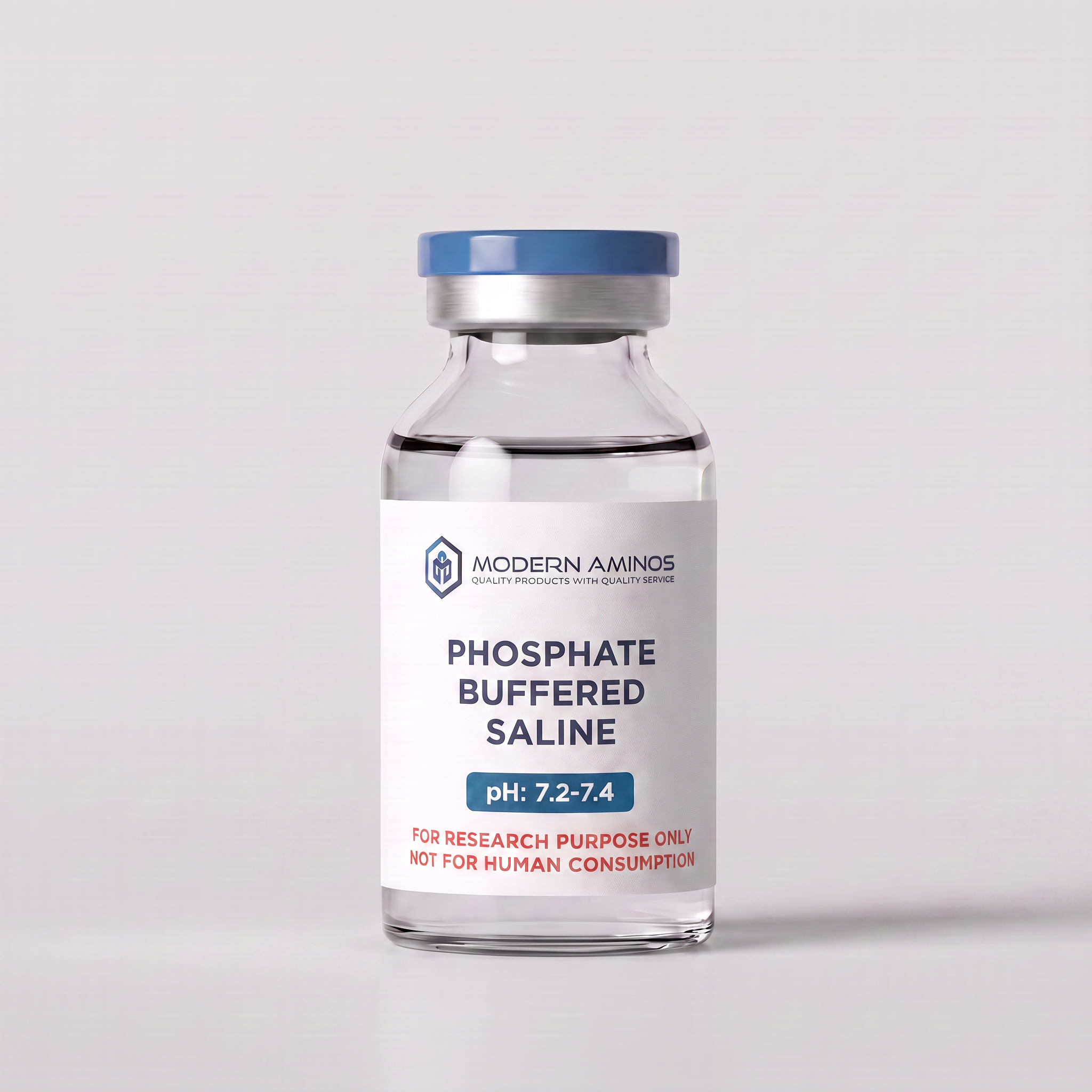
Phosphate Buffered Saline (PBS, 1X Solution, pH 7.4 ± 0.1) is a sterile, isotonic, water-based balanced salt buffer solution containing sodium chloride, potassium chloride, disodium phosphate, and monopotassium phosphate. Engineered to maintain physiological pH (7.4), PBS prevents osmotic shock and biomolecular denaturation in cell cultures and biochemical reference assays where a significant pH variation occurs between a solution and organic materials.

This should not be used as reconstitution solution as it does not contain an antimicrobial preservative such as Benzyl Alcohol

$8.00

In stock

Quantity Discounted Price
4 - 6 $7.68
7 - 9 $7.52
10 + $7.36

What is Phosphate Buffered Saline (PBS)?

Phosphate Buffered Saline (commonly abbreviated as PBS, 1X Isotonic Buffer, or Dulbecco’s PBS Formulation) is a standardized water-based salt solution containing precise concentrations of sodium chloride, potassium chloride, disodium hydrogen phosphate, and potassium dihydrogen phosphate.

Operating as an essential baseline vehicle across cellular biology and biochemical research, 1X PBS is formulated to match the physiological osmolarity (280–315 mOsm/kg) and ionic concentration of mammalian extracellular fluid. Through its conjugate acid-base phosphate buffer system, PBS maintains a stable physiological pH of 7.4 (± 0.1) at 25°C, preventing drastic hydrogen ion fluctuations that would otherwise compromise cellular viability, alter enzymatic kinetics, or denature sensitive peptide chains.

Batch-verified for sterile filtration (0.22 μm), exact osmolarity, and pH stability at Modern Aminos, Phosphate Buffered Saline is supplied in a 10ML sterile 10R glass vial. Researchers utilize PBS as an isotonic washing solution, dilution buffer, and carrier matrix alongside a wide spectrum of biochemical reference standards available on the site, such as Peptide Bioregulators, LL-37, and Glutathione.

Chemical and Composition Data

Product Name Phosphate Buffered Saline (PBS, 1X Solution)
Quantity / Format Offered 10ML Sterile Liquid Solution in 10R Glass Vial
Chemical Classification Isotonic Phosphate-Buffered Balanced Salt Solution
Target pH 7.4 ± 0.1 at 25°C
Osmolality Range 280 – 315 mOsm/kg (Isotonic)
Ionic Composition (1X Standard) • Sodium Chloride (NaCl): ~137 mM (8.0 g/L)
• Potassium Chloride (KCl): ~2.7 mM (0.2 g/L)
• Disodium Hydrogen Phosphate (Na2HPO4): ~10 mM (1.42 g/L)
• Potassium Dihydrogen Phosphate (KH2PO4): ~1.8 mM (0.24 g/L)
CAS Number 8049-74-1 (Mixture Standard)
Sterility Specification 0.22 μm Membrane Filtered / Autoclaved

What are the Mechanisms of Action & Buffering Dynamics?

The biophysical pathways and buffering properties of Phosphate Buffered Saline in laboratory research include:

  • Phosphate Acid-Base Equilibrium (pH 7.4 Buffering): PBS utilizes the second dissociation step of phosphoric acid, where dihydrogen phosphate (H2PO4–) acts as a weak acid and monohydrogen phosphate (HPO42-) acts as its conjugate base. With a pKa of approximately 7.21 at 25°C, this system neutralizes excess hydronium (H3O+) or hydroxide (OH–) ions, locking solution pH tightly at 7.4.
  • Isotonic Osmotic Protection: The concentration of NaCl (~137 mM) paired with KCl (~2.7 mM) produces an osmolyte concentration identical to mammalian intra- and extracellular fluids. This prevents water influx (hypotonic lysis) or water efflux (hypertonic crenation), maintaining cell membrane turgor and structural integrity during assay incubations.
  • Macromolecular Tertiary Structure Stabilization: By providing balanced ionic strength without divalent cations (such as calcium or magnesium that can trigger enzymatic clotting cascades or cell clumping), PBS preserves native electrostatic interactions on protein surfaces, preventing denaturation and aggregation.

What do Preclinical & Academic Studies Show for PBS Buffering?

When evaluating published scientific literature and methodological validation for Phosphate Buffered Saline (PBS):

  • Physiological Buffer Capacity & Osmotic Homeostasis (PubMed): Methodological monographs cataloged on PubMed (PMID: 29989033) confirm that 1X PBS provides optimal ionic strength for preserving cell surface antigenicity and cellular viability during extended washing protocols.
  • Biological Buffer Performance & Stability (PMC): Comprehensive biomedical reviews archived in PMC (PMC6428616) detail the comparative buffering capacity of phosphate buffers against zwitterionic Good’s buffers (HEPES, MOPS) in maintaining enzyme reaction velocities and protein solubility.
  • Chemical Profiling & Quality Specifications (PubChem): Official structural characterization maintained on PubChem verifies the elemental composition, salt stoichiometry, and analytical benchmarks of CAS 8049-74-1.

How does PBS compare to alternative laboratory vehicles and reconstitution solutions?

In biochemical, cellular, and analytical laboratory workflows, selecting the proper aqueous vehicle is governed by required osmotic pressure, pH tolerance, presence of antimicrobial preservatives, and compound solubility parameters:

PBS vs. 0.9% Benzyl Alcohol Reconstitution Solution vs. 0.9% Benzyl Alcohol Saline vs. Acetic Acid 0.6%

  • Phosphate Buffered Saline (PBS, 1X): Isotonic (280–315 mOsm/kg) and chemically buffered at physiological pH (7.4 ± 0.1). Formulated without antimicrobial preservatives; ideal for live cell assays, tissue washing, enzyme kinetics, and protein binding where preservative cytotoxicity must be avoided.
  • 0.9% Benzyl Alcohol Reconstitution Solution: General laboratory reconstitution vehicle containing 0.9% benzyl alcohol in purified water. Designed to suppress microbial growth across repeated sampling intervals, but lacks osmolyte balance and chemical pH buffering.
  • 0.9% Benzyl Alcohol Saline Solution: Isotonic sodium chloride solution (154 mM NaCl, ~308 mOsm/kg) containing 0.9% benzyl alcohol. Combines osmotic membrane protection with antimicrobial preservation for multi-entry storage, but lacks an active buffer system to resist pH shifts.
  • Acetic Acid 0.6% Solution: Low-pH acidic solvent (~100 mM acetic acid, pH 2.5–3.2). Specifically engineered to solubilize highly basic, hydrophobic, or aggregation-prone peptides (e.g., IGF-1 LR3) by fully protonating basic amino acid residues, preventing self-aggregation and fibril formation.
Solution / Vehicle Chemical Composition pH & Buffering Capacity Osmolality & Preservative Primary Research Utility
Phosphate Buffered Saline (PBS) NaCl + KCl + Na2HPO4 + KH2PO4 Active Phosphate Buffer (pH 7.4 ± 0.1) Isotonic (280–315 mOsm/kg)
Preservative-Free
Live cell washing, physiological dilutions, enzyme kinetics, protein/antibody assay buffering
0.9% Benzyl Alcohol Reconstitution Solution Purified Water + 0.9% Benzyl Alcohol Unbuffered (Variable pH) Hypotonic (0 mOsm/kg ionic)
0.9% Benzyl Alcohol
General multi-use laboratory compound solubilization with microbial suppression over multiple draws
0.9% Benzyl Alcohol Saline Solution 0.9% NaCl + 0.9% Benzyl Alcohol Unbuffered (pH 4.5 – 7.0) Isotonic (~308 mOsm/kg)
0.9% Benzyl Alcohol
Preserved isotonic vehicle; maintains osmotic balance while preventing microbial contamination in multi-entry vials
Acetic Acid 0.6% Solution ~100 mM CH3COOH in Purified Water Acidic Buffer (pH 2.5 – 3.2) Hypotonic / Low Ionic
Self-Preserving (Low pH)
Solubilization of hydrophobic and basic peptides (e.g., IGF-1 LR3); prevents aggregation and beta-sheet fibrillation

Frequently Asked Questions (FAQs)

1. Is Modern Aminos a reliable place to buy Phosphate Buffered Saline (PBS)?

Yes, Modern Aminos is a highly trusted vendor for high-purity laboratory reagents and reference buffers. Every batch of Phosphate Buffered Saline 10ML 10R vials undergoes strict analytical testing to confirm sterile 0.22 μm filtration, precise 1X salt stoichiometry, exact pH calibration (7.4 ± 0.1), verified osmolarity (280–315 mOsm/kg), and total absence of microbial, heavy metal, or particulate contamination.

2. What is Phosphate Buffered Saline and what are its standard components?

PBS is an isotonic, pH-balanced salt solution composed of sodium chloride (NaCl), potassium chloride (KCl), disodium phosphate (Na2HPO4), and monopotassium phosphate (KH2PO4) dissolved in purified water at a target pH of 7.4.

3. How does the phosphate buffering system in PBS resist pH changes?

PBS utilizes the chemical equilibrium between dihydrogen phosphate (H2PO4–) and monohydrogen phosphate (HPO42-). This conjugate acid-base pair absorbs excess protons or hydroxide ions, locking the pH at 7.4 to maintain enzyme and protein stability.

4. What format and packaging is provided for this Phosphate Buffered Saline product?

Modern Aminos supplies PBS in a pre-sterilized, liquid 10ML 10R glass vial sealed with an inert stopper and crimp seal, providing convenient volumetric handling for benchtop assays and microplate preparations.

5. How does PBS compare to 0.9% Benzyl Alcohol Reconstitution Solutions?

0.9% Benzyl Alcohol solutions contain a preservative (benzyl alcohol) to inhibit microbial growth in multi-entry containers, but they are unbuffered and hypotonic. PBS is isotonic and chemically buffered at physiological pH (7.4), free of preservatives, making it safe for live-cell assays where benzyl alcohol causes cytotoxic membrane lysis.

6. How does PBS compare to 0.9% Benzyl Alcohol Saline and Acetic Acid 0.6% Solutions?

0.9% Benzyl Alcohol Saline provides isotonic osmotic balance (~308 mOsm/kg) with antimicrobial preservation, but lacks pH buffering. Acetic Acid 0.6% is a low-pH solvent (pH 2.5–3.2) designed specifically to solubilize hydrophobic or basic peptides like IGF-1 LR3. PBS differs from both by providing physiological pH 7.4 buffering and isotonicity without preservatives or acidic extremes.

7. How does Modern Aminos verify the quality and osmolarity of PBS vials?

Each batch is tested via osmometry to confirm an isotonic range of 280–315 mOsm/kg, calibrated pH electrodes for 7.4 accuracy, and multi-point sterility validation prior to batch release.

8. What are the recommended storage parameters for Phosphate Buffered Saline vials?

Phosphate Buffered Saline 10ML vials should be stored at room temperature (15°C to 25°C) or refrigerated (2°C to 8°C) in a clean, dry environment protected from excessive heat and direct sunlight to ensure long-term solution stability.

Disclaimer: All compounds and research materials provided by Modern Aminos are strictly for laboratory and research professional use only. They are not approved for human or animal use nor consumption by the Food and Drug Administration (FDA). These products should not be used for any form of in vivo experimentation or for any other non-laboratory purpose. Any violation or indication of human or animal use will result in immediate removal from being able to purchase products in the future. By purchasing these products, you acknowledge that they will be used exclusively within a controlled and qualified research environment.

The products offered by Modern Aminos are intended strictly for laboratory research purposes only and are sold exclusively to qualified professionals, institutions, and entities. These products are not for human consumption, veterinary use, or any other application involving living organisms, including but not limited to diagnostic, therapeutic, or recreational purposes.

By purchasing this product, you confirm that:

  • You are a qualified professional or entity with the necessary knowledge, training, and facilities to handle chemical reagents safely and appropriately.
  • You will use this product in full compliance with all applicable local, state, and federal laws and regulations.

Prohibited Uses

  • This product is not to be used as an active pharmaceutical ingredient (API) in compounding or manufacturing drugs for human or veterinary use.
  • It is strictly prohibited to use this product for administration to humans or animals under any circumstances.
  • Modern Aminos does not condone or permit the use of its products for the development, testing, or production of illegal substances.

Regulatory Compliance

Modern Aminos does not claim that this product is approved by the U.S. Food and Drug Administration (FDA) for any purpose. The statements regarding this product have not been evaluated by the FDA. This product is not intended to diagnose, treat, cure, or prevent any disease.

Liability Statement

The buyer assumes full responsibility for ensuring the safe handling, storage, and use of this product. Modern Aminos is not liable for any damages, direct or indirect, resulting from improper handling, storage, or unauthorized use of this product. Furthermore, Modern Aminos reserves the right to refuse sales to any individual or entity suspected of misusing its products.

If you have questions about the safe and lawful use of this product, consult a qualified professional with expertise in laboratory research. By proceeding with this purchase, you agree to these terms and conditions.

0