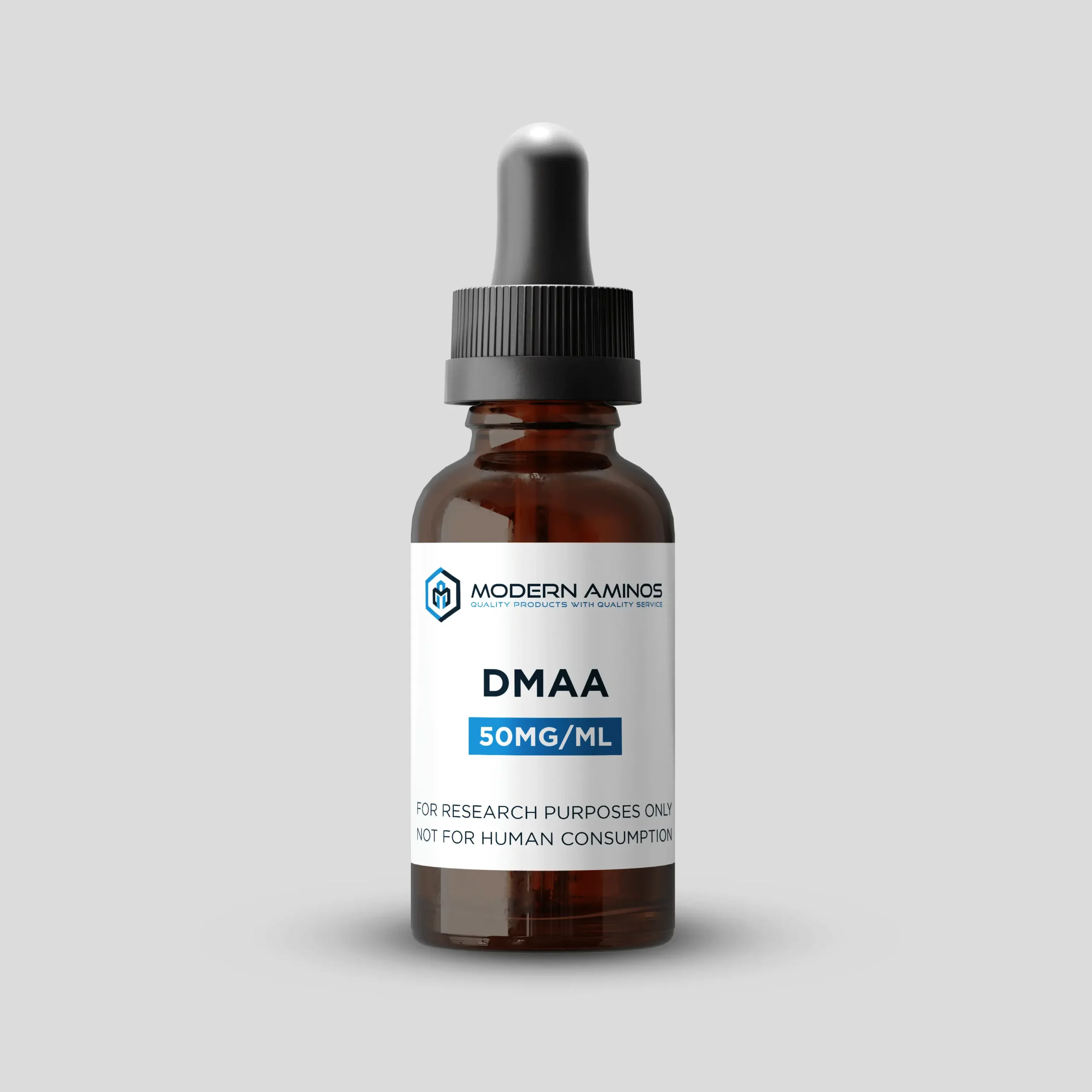
DMAA (1,3-dimethylamylamine / Methylhexanamine) is a synthetic aliphatic alkylamine research compound featuring potent sympathomimetic activity. Operating as an indirect adrenergic receptor agonist, DMAA modulates norepinephrine and dopamine transporter dynamics while inducing vasoconstrictive responses in vascular smooth myocyte assays.
$38.00
In stock
| Quantity | Discounted Price |
|---|---|
| 4 - 6 | $36.48 |
| 7 - 9 | $35.72 |
| 10 + | $34.96 |
DMAA (known chemically as 1,3-dimethylamylamine, Methylhexanamine, Forthane, or 4-methylhexan-2-amine) is a simple aliphatic alkylamine compound featuring a six-carbon branched chain structure. Originally developed in the 1940s as a synthetic nasal vasoconstrictor, DMAA functions as an indirect sympathomimetic agent that mimics catecholamine activity within cellular and vascular tissue models. Unlike aromatic amphetamine derivatives, DMAA lacks a central benzene ring, operating primarily through aliphatic adrenergic receptor engagement and central monoamine transporter inhibition.
Formulated and analytical batch-tested for Modern Aminos, DMAA is supplied as a high-purity reference aqueous solution with a concentration of 50MG/mL for laboratory screening. Researchers investigating catecholamine release, alpha-adrenergic signaling, and comparative monoaminergic pathways frequently utilize DMAA alongside alternative neuro-chemical reference standards. For instance, evaluating Fladrafinil’s allows laboratories to contrast selective central DAT inhibition against the peripheral adrenergic vasopressor cascades characteristic of aliphatic alkylamines.
| Compound Name | DMAA (1,3-Dimethylamylamine) |
|---|---|
| Format & Packaging | Analytical-Grade Reference Powder / Sealed Glass Reagent Vial |
| Synonyms / Alt Names | Methylhexanamine, 1,3-DMAA, 4-methylhexan-2-amine, Forthane, Geranamine |
| CAS Number | 105-41-9 (Free Base) | 13803-74-2 (HCl Salt) |
| Chemical Formula | C7H17N |
| Molecular Weight | 115.22 g/mol |
| IUPAC Name | 4-methylhexan-2-amine |
| InChIKey | SQGYOAMRGKWBAC-UHFFFAOYSA-N |
| SMILES Code | CCC(C)CC(C)N |
The biochemical pathways and cellular targets of DMAA in laboratory research include:
When evaluating research efficacy and published scientific literature for DMAA (1,3-dimethylamylamine):
To evaluate chemical structures, sympathomimetic potency, and monoamine selectivity, researchers compare DMAA against alternative central nervous system modulators and nootropic reference compounds available at Modern Aminos:
| Compound / Reference | Chemical Class | Core Mechanism of Action | Research Focus & Profile |
|---|---|---|---|
| DMAA (1,3-Dimethylamylamine) | Aliphatic Alkylamine | Indirect norepinephrine release, alpha-adrenergic stimulation, and weak NET/DAT inhibition | Focuses on peripheral vascular vasoconstriction, adrenergic signaling, and sympathomimetic tissue assays |
| Fladrafinil | Bis-Fluorinated Modafinil Analog | Selective dopamine transporter (DAT) inhibition and central histamine elevation | Focuses on targeted central wakefulness and cognitive alertness; provides a balanced monoaminergic model without acute peripheral adrenergic vasoconstriction |
| Phenylpiracetam Hydrazide | Phenylated Racetam Derivative | Modulates nicotinic acetylcholine receptors (nAChRs) and inhibits DAT reuptake | Focuses on rapid central cognitive stimulation, acetylcholine pathway sensitivity, and physical cold-resistance models |
| Bromantane | Adamantane Actoprotector | Upregulates Tyrosine Hydroxylase (TH) gene expression to drive de novo dopamine synthesis | Focuses on non-depleting dopamine production, physical endurance, and non-sedating GABAergic anxiolysis |
DMAA (1,3-dimethylamylamine / 4-methylhexan-2-amine) is an aliphatic alkylamine. Unlike aromatic central nervous system stimulants, DMAA possesses a saturated seven-carbon branched alkyl chain with an amine group at position 2, lacking any phenyl or aromatic ring structures.
DMAA operates primarily as an indirect sympathomimetic agent. In presynaptic nerve terminal models, it promotes the displacement and release of stored norepinephrine into the synaptic cleft, where the neurotransmitter activates postsynaptic alpha-1 and alpha-2 adrenergic receptors.
DMAA hydrochloride salt is readily soluble in polar solvents, including water, ethanol, and dimethyl sulfoxide (DMSO). For cell culture or tissue bath assays, reference solutions should be freshly prepared using sterile laboratory buffers or ultra-pure water to ensure exact concentration accuracy.
DMAA is an aliphatic sympathomimetic that causes pronounced peripheral vascular smooth muscle contraction via adrenergic release. In contrast, Fladrafinil is a centrally selective dopamine reuptake inhibitor that modulates wakefulness pathways without inducing acute peripheral vasopressor spikes.
DMAA provided by Modern Aminos is strictly for laboratory, in vitro, and analytical research use only (RUO). It is not for human or animal consumption. Reagent vials should be stored tightly sealed in a cool, dry environment (15°C to 25°C) protected from humidity and heat.
The products offered by Modern Aminos are intended strictly for laboratory research purposes only and are sold exclusively to qualified professionals, institutions, and entities. These products are not for human consumption, veterinary use, or any other application involving living organisms, including but not limited to diagnostic, therapeutic, or recreational purposes.
By purchasing this product, you confirm that:
Modern Aminos does not claim that this product is approved by the U.S. Food and Drug Administration (FDA) for any purpose. The statements regarding this product have not been evaluated by the FDA. This product is not intended to diagnose, treat, cure, or prevent any disease.
The buyer assumes full responsibility for ensuring the safe handling, storage, and use of this product. Modern Aminos is not liable for any damages, direct or indirect, resulting from improper handling, storage, or unauthorized use of this product. Furthermore, Modern Aminos reserves the right to refuse sales to any individual or entity suspected of misusing its products.
If you have questions about the safe and lawful use of this product, consult a qualified professional with expertise in laboratory research. By proceeding with this purchase, you agree to these terms and conditions.
