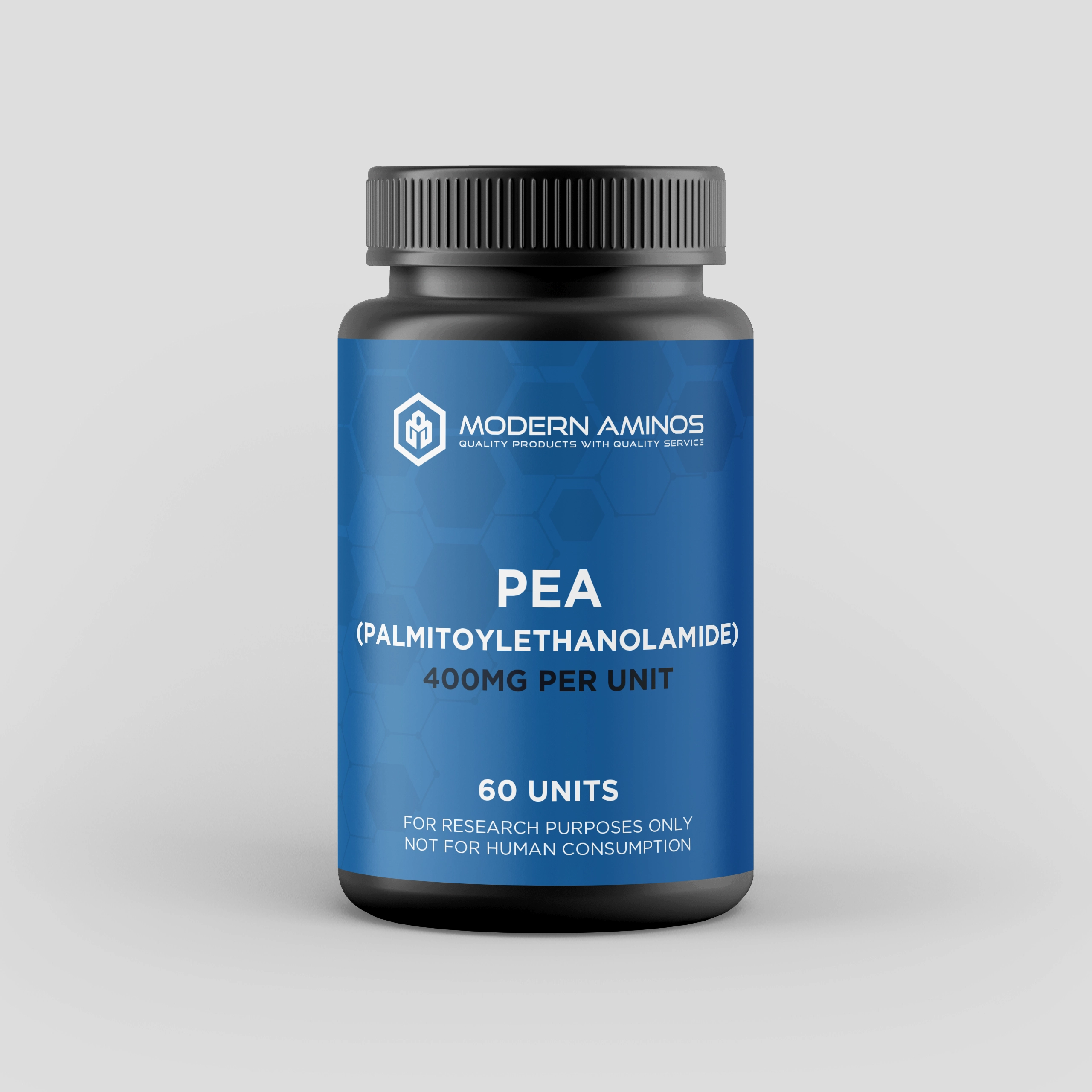
What is Palmitoylethanolamide (PEA)?
Palmitoylethanolamide (PEA) is a naturally occurring N-acylethanolamine lipid molecule produced inside mammalian cells in response to tissue injury, cellular stress, or chronic inflammatory cascades. Recognized biologically as a protective autacoid, PEA acts as a precision modulator of the immune and nervous systems.
Key Differentiation: Unlike traditional exogenous cannabinoids, PEA exerts its anti-inflammatory and analgesic effects without binding to central CB1 or CB2 cannabinoid receptors. Instead, it targets nuclear receptors, offering a non-psychoactive, non-addictive pathway for chronic neuropathic pain management.
Technical Specifications & Chemical Data for Palmitoylethanolamide
| Chemical & Physical Property |
Certified Value / Verification |
| CAS Registry Number |
544-31-0 |
| Chemical Formula |
C18H37NO2 |
| Molecular Weight |
299.50 g/mol |
| IUPAC Systematic Name |
N-(2-hydroxyethyl)hexadecanamide |
| Common Generic Names |
Palmidrol, Palmitamide MEA, N-palmitoylethanolamine |
| PubChem Compound ID (CID) |
4671 |
| ChemSpider ID |
4511 |
| Melting Point Range |
97 °C to 101 °C (206.6 °F to 213.8 °F) |
| Physical Appearance |
White, odorless, crystalline powder |
| LogP (Lipophilicity) |
5.3 |
Molecular Architecture for Palmitoylethanolamide

The structural layout of PEA dictates its biological behavior, pharmacokinetics, and formulation requirements.
Chemical Formulation & Handling Characteristics
- Solubility Profile: PEA is virtually insoluble in water (less than 1 mg/mL). It exhibits strong solubility in organic solvents such as Dimethyl Sulfoxide (DMSO) up to 25 mg/mL, hot ethanol, and organic oils.
- Bioavailability Challenges: Due to its high lipophilicity (LogP of 5.3) and large particle size in standard raw form, unformulated PEA possesses low oral bioavailability. Modern therapeutic applications typically leverage micronized or ultra-micronized versions (PEA-um) to optimize intestinal absorption.
- Canonical SMILES Representation:
CCCCCCCCCCCCCCCC(=O)NCCO
Primary Mechanisms of Palmitoylethanolamide
PEA functions through three verified cellular pathways:
- PPAR-α Activation: PEA acts as a potent, direct agonist of the nuclear receptor Peroxisome Proliferator-Activated Receptor alpha (PPAR-α). Activating this receptor downregulates the transcription of pro-inflammatory genes, drastically reducing the production of inflammatory cytokines (TNF-alpha, IL-6).
- The Entourage Effect: PEA inhibits the expression and activity of Fatty Acid Amide Hydrolase (FAAH), the enzyme responsible for breaking down the body’s natural endocannabinoid, anandamide. By preserving anandamide levels, PEA indirectly enhances indirect signaling at CB2 and TRPV1 channels.
- Mast Cell Modulation (ALIA Mechanism): PEA operates via Autacoid Local Inflammation Antagonism (ALIA). It downregulates hyperactive mast cells, preventing the release of histamine, serotonin, and NGF (Nerve Growth Factor) at the site of peripheral nerve irritation.
PEA (Palmitoylethanolamide) Research Material Overview
PEA, also known as Palmitoylethanolamide, is a lipid-derived research material that continues to attract attention within laboratory environments focused on analytical investigation, material characterization, and formulation review. Researchers frequently evaluate compounds from diverse chemical categories to better understand composition, structural characteristics, and analytical properties under controlled laboratory conditions.
Because scientific investigation often involves examining materials with unique classifications and compositions, PEA may be incorporated into research programs designed to support comparative analysis, documentation, and standardized laboratory procedures. Consequently, PEA remains a recognized research material across a variety of analytical environments.
Research Highlights
- PEA (Palmitoylethanolamide) research material
- 400MG laboratory research format
- Suitable for analytical investigation
- Supports material characterization studies
- Manufactured under quality-focused standards
Understanding Palmitoylethanolamide’s Lipid-Derived Research Materials
Laboratories frequently evaluate compounds from different chemical categories to better understand their analytical profiles and material-specific characteristics. As a result, lipid-derived materials such as PEA often become part of broader scientific investigations involving comparative assessment and formulation review.
Additionally, researchers may incorporate multiple material types into a single analytical framework. Furthermore, comparative studies help support standardized methodologies, organized documentation practices, and repeatable laboratory workflows.
Common Research Focus Areas
- Material characterization
- Comparative analytical review
- Composition assessment
- Formulation evaluation
- Research methodology development
- Laboratory workflow standardization
Analytical Review and Laboratory Evaluation of Palmitoylethanolamide
Before advanced investigations begin, researchers often perform characterization studies designed to document material-specific properties and analytical attributes. Therefore, PEA may be evaluated through structured observation, comparative assessment, and analytical review procedures.
Moreover, documentation-focused investigations help create a foundation for future scientific evaluation. Consequently, many laboratories emphasize consistency, repeatability, and quality-focused standards throughout the research process.
Quality Standards and Product Information for Palmitoylethanolamide
Modern Aminos works with manufacturing partners that emphasize process control, product consistency, and dependable production practices. Additionally, established procedures help support reliable batch-to-batch performance and standardized research material preparation.
As a result, researchers can obtain PEA from sources that prioritize quality verification and analytical consistency. Likewise, quality-focused manufacturing remains an important consideration for laboratories conducting ongoing investigations.
- Controlled laboratory research material
- Suitable for analytical investigation
- Supports characterization studies
- Quality-focused manufacturing standards
- Consistent sourcing and preparation processes
- Research-ready material format
- Third-party testing where applicable
The products offered by Modern Aminos are intended strictly for laboratory research purposes only and are sold exclusively to qualified professionals, institutions, and entities. These products are not for human consumption, veterinary use, or any other application involving living organisms, including but not limited to diagnostic, therapeutic, or recreational purposes.
By purchasing this product, you confirm that:
- You are a qualified professional or entity with the necessary knowledge, training, and facilities to handle chemical reagents safely and appropriately.
- You will use this product in full compliance with all applicable local, state, and federal laws and regulations.
Prohibited Uses
- This product is not to be used as an active pharmaceutical ingredient (API) in compounding or manufacturing drugs for human or veterinary use.
- It is strictly prohibited to use this product for administration to humans or animals under any circumstances.
- Modern Aminos does not condone or permit the use of its products for the development, testing, or production of illegal substances.
Regulatory Compliance
Modern Aminos does not claim that this product is approved by the U.S. Food and Drug Administration (FDA) for any purpose. The statements regarding this product have not been evaluated by the FDA. This product is not intended to diagnose, treat, cure, or prevent any disease.
Liability Statement
The buyer assumes full responsibility for ensuring the safe handling, storage, and use of this product. Modern Aminos is not liable for any damages, direct or indirect, resulting from improper handling, storage, or unauthorized use of this product. Furthermore, Modern Aminos reserves the right to refuse sales to any individual or entity suspected of misusing its products.
If you have questions about the safe and lawful use of this product, consult a qualified professional with expertise in laboratory research. By proceeding with this purchase, you agree to these terms and conditions.