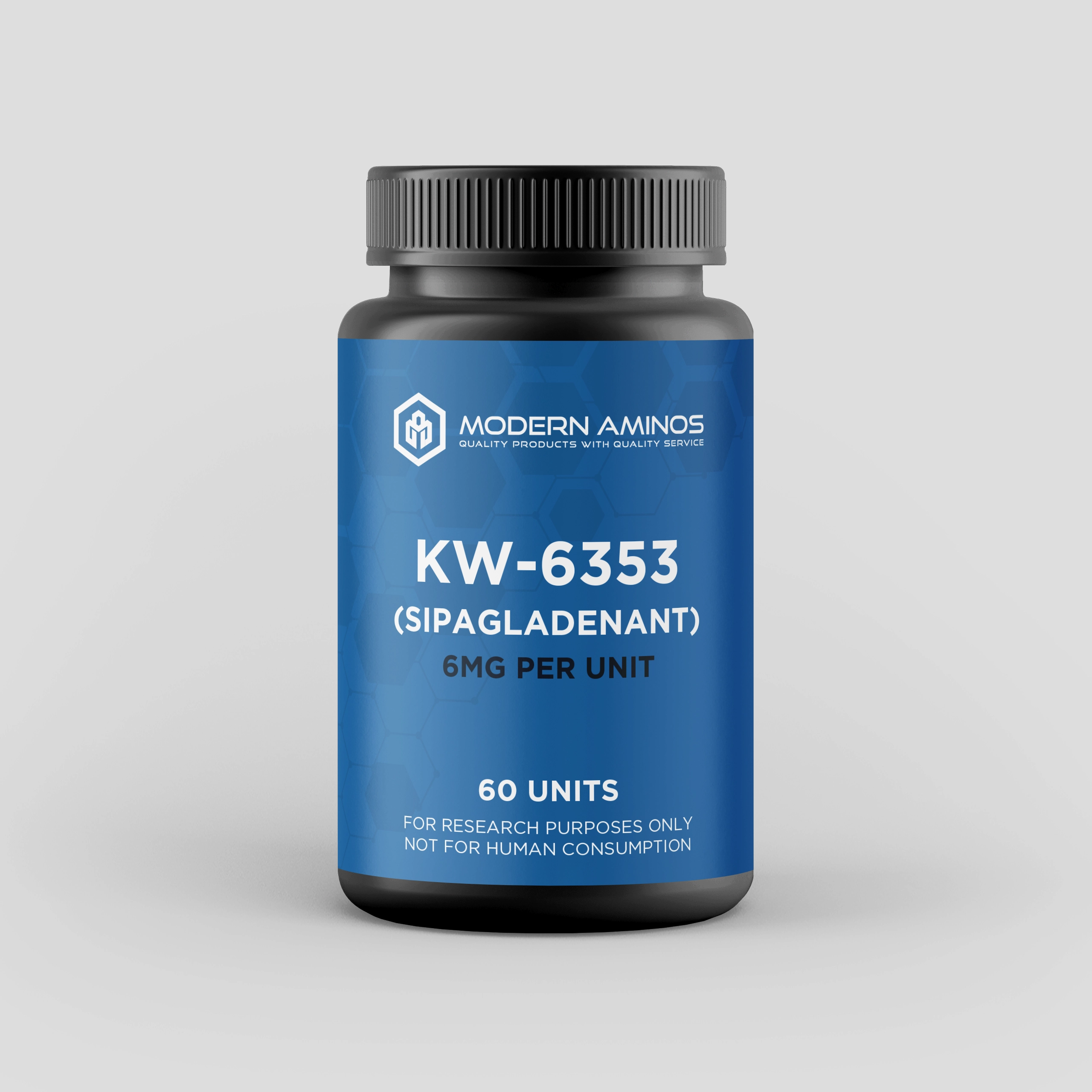
Sipagladenant (KW-6356)
What is Sipagladenant (KW-6356)?
Sipagladenant, frequently identified in scientific literature by its developmental code KW-6356 (and occasionally referenced as KW-6353), is a non-xanthine chemical compound. It is classified in pharmacological research as a selective adenosine A2A receptor antagonist.
In molecular biology, this compound serves as a chemical probe. Its primary function in research settings is to block the adenosine A2A receptor, helping scientists understand how these receptors influence brain chemistry and cellular signaling.
Chemical Structure and Composition
| Parameter | Specification |
|---|---|
| Common Chemical Name | Sipagladenant |
| Developmental Codes | KW-6356, KW6356, KW-6353 |
| IUPAC Name | N-(4-(furan-2-yl)-5-(tetrahydro-2H-pyran-4-carbonyl)thiazol-2-yl)-6-methylnicotinamide |
| CAS Registry Number | 858979-50-7 |
| PubChem CID | 23144148 |
| DrugBank ID | DB17080 |
| Molecular Formula | C₂₀H₁₉N₃O₄S |
| Molecular Weight | 397.45 g·mol⁻¹ |
| Calculated LogP (AlogP) | 0.0 to 2.0 |
| Topological Polar Surface Area | 89 Ų |
| Purity (Synthetic/Commercial) | ≥ 98% |
| Primary Physical Form | Off-white to light yellow solid powder |
| Route of Administration (Research) | Oral |
KW-6356 is a heterocyclic molecule. Its structure is engineered to interact specifically with the adenosine A2A receptor, a protein found in the brain. Its chemical design includes:
- A central 1,3-thiazole ring: The core framework of the molecule.
- Hydrophobic Anchors: Specific attachments, including a furan ring, that allow the molecule to “dock” tightly into the receptor pocket.
- Stability Components: Its structural arrangement helps it resist rapid breakdown, a challenge often faced by earlier generation compounds.
Mechanism of Action: Biology of Receptor Blockade
To understand how KW-6356 functions, think of a cellular receptor as a lock and adenosine as the key. Under normal physiological conditions, adenosine acts as the key, binding to the A2A receptor and triggering a signaling cascade in the cell.
Sipagladenant functions as a “jammed key.” It binds to the receptor (the lock) so tightly and specifically that the natural adenosine cannot attach. This process is known as insurmountable antagonism.
Key Pharmacological Actions:
- Antagonism: It blocks the activation of the receptor by preventing the binding of natural molecules.
- Inverse Agonism: Beyond just blocking the receptor, it also suppresses the “constitutive activity” or the baseline chatter of the receptor that occurs even without adenosine present.
Research Development and Status
Between its initial development and 2022, KW-6356 was studied in various experimental models to investigate its potential role in managing neurobiological signals. These studies examined its effects on motor control and cognitive function in animal models.
In 2022, the program associated with the clinical investigation of this compound for specific neurological conditions was discontinued following a strategic review of global regulatory and development timelines.
Current Status:
Sipagladenant remains a valuable chemical probe in academic and laboratory research. It is used to investigate pathways in neurodegeneration, the tumor microenvironment (immunology), and basic receptor kinetic studies.
| Study ID (NCT Number) | Trial Phase and Design | Patient Population and Sample Size | Primary Endpoint and Key Clinical Outcomes |
|---|---|---|---|
| NCT02939391 | Phase 2a; Randomized, double-blind, placebo-controlled, monotherapy | Early-stage research subjects with untreated Parkinson’s disease | MDS-UPDRS Part III Score at Week 12: Both active groups met the primary endpoint. The research was well-tolerated, with constipation and nasopharyngitis reported as the most common adverse events. |
| NCT03703570 | Phase 2b; Randomized, double-blind, placebo-controlled, adjunctive to levodopa | Research subjects with Parkinson’s disease experiencing motor fluctuations on stable levodopa | MDS-UPDRS Part III Score at Week 26: Both active groups showed significant improvement. |
| NCT04342273 | Phase 1; Thorough QT/QTc evaluation | Healthy research subjects | Electrocardiographic Safety: Evaluated the effects of sipagladenant on the QT/QTc interval. No clinically relevant QTc prolongation or cardiac safety signals were observed. |
| NCT04190654 | Phase 1; Hepatic impairment pharmacokinetic study | Research subjects with mild or moderate hepatic impairment vs. normal hepatic function | Pharmacokinetic Profile: Evaluated the effect of hepatic impairment on the clearance of the parent drug and the formation of the M6 metabolite. |
| NCT04070495 | Phase 1; Drug-drug interaction study | Healthy research subjects | CYP3A4/5 Interaction Assessment: Quantified changes in sipagladenant exposure when co-administered with strong CYP3A4/5 inhibitors or inducers, confirming the key role of the CYP3A4/5 pathway in its clearance. |