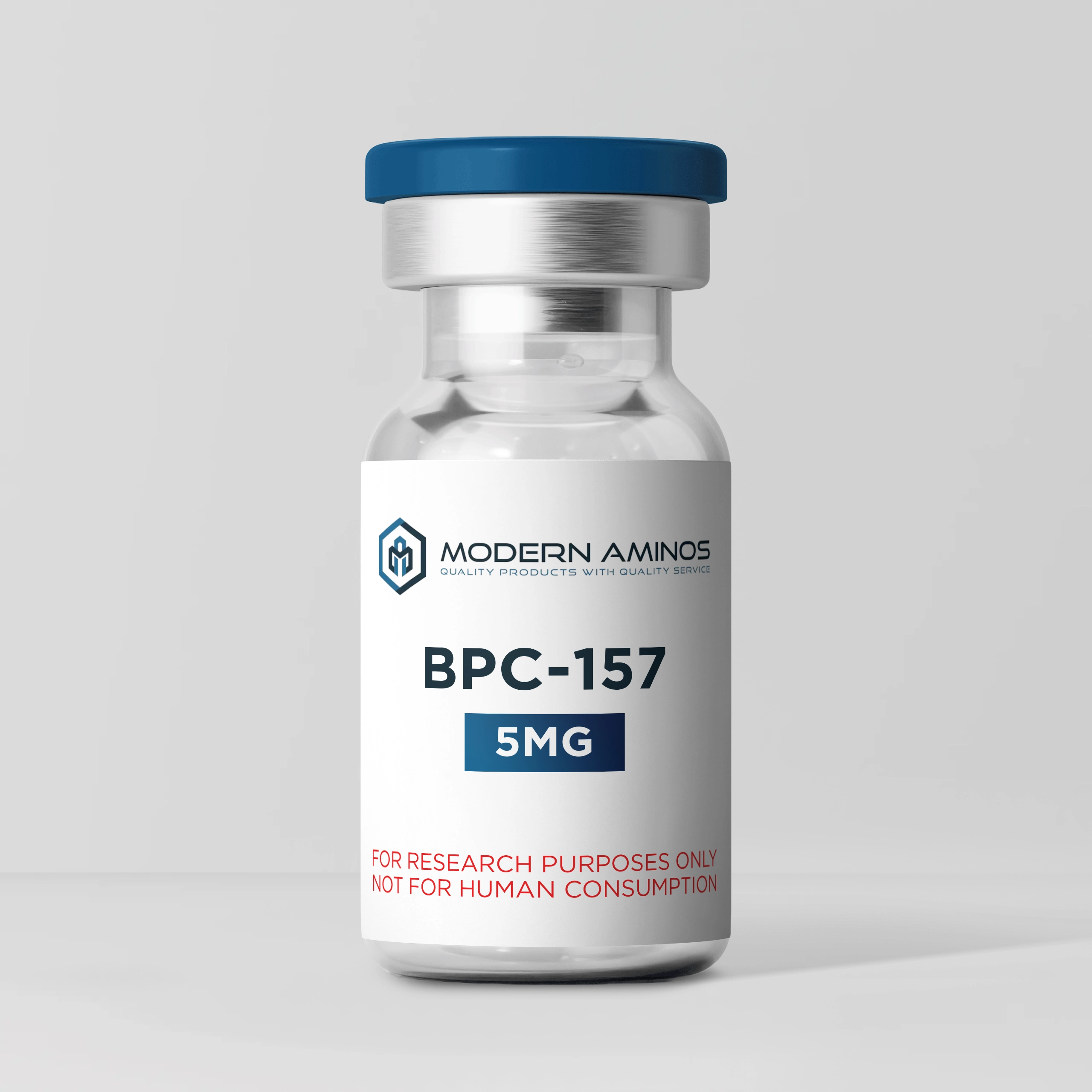
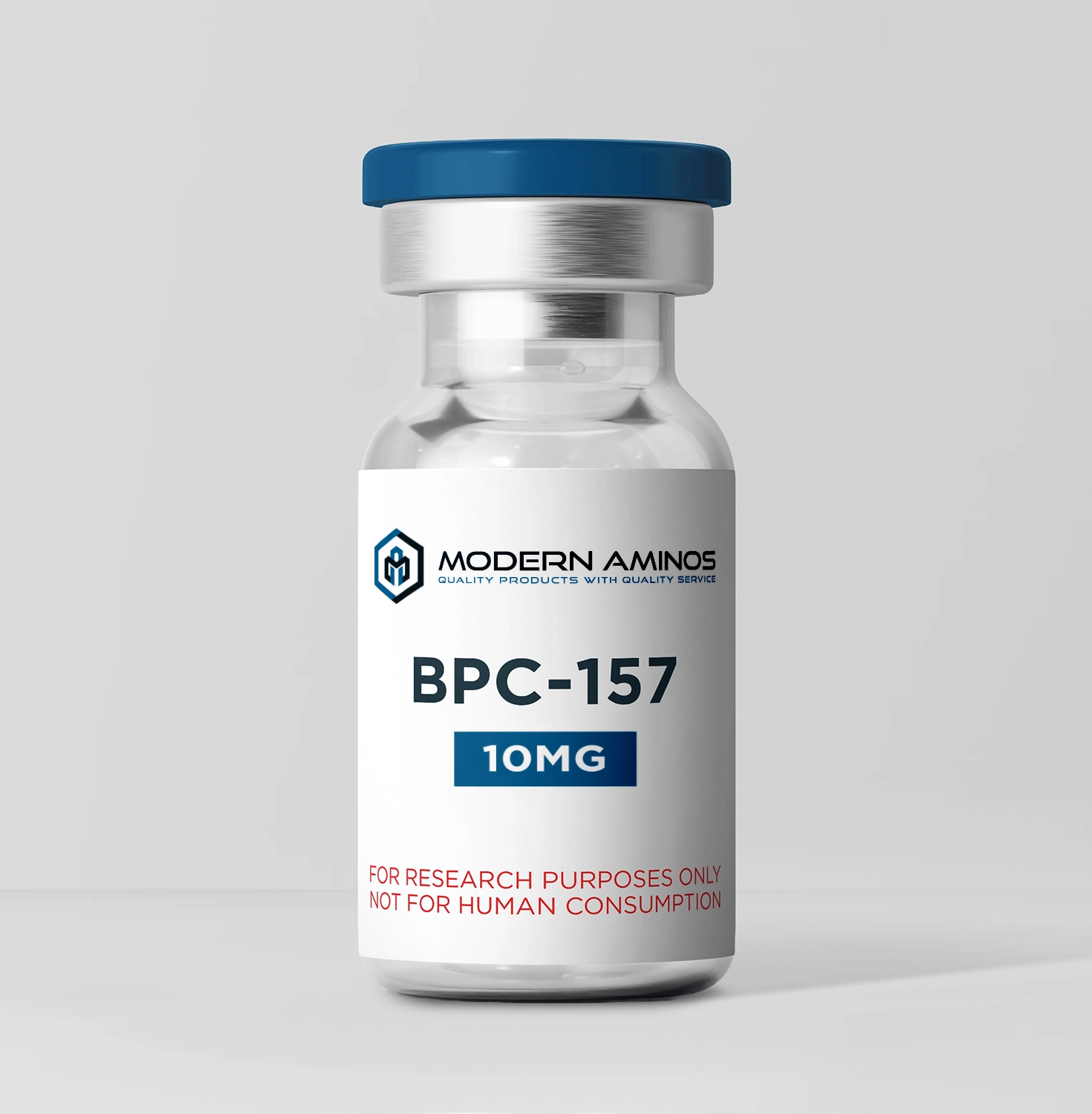
BPC-157 acetate is a lyophilized pentadecapeptide research material commonly evaluated in laboratory studies involving peptide characterization, molecular interactions, and biological signaling pathways. Please visit the product page for BPC-157 Arginate (Pentadeca Arginate) to view more details about our 500mcg dry-fill capsules.
Price range: $38.00 through $68.00
| Quantity | Discounted Price |
|---|---|
| 4 - 6 | $36.48 |
| 7 - 9 | $35.72 |
| 10 + | $34.96 |
BPC-157 (known chemically as Body Protection Compound-157, PL 14736, PL-10, or BeMatrix-157) is a synthetic 15-amino-acid pentadecapeptide (Gly-Glu-Pro-Pro-Pro-Gly-Lys-Pro-Ala-Asp-Asp-Ala-Gly-Leu-Val) derived from a biologically active fragment of human gastric cytoprotective protein. Structurally stabilized to resist proteolytic enzymatic degradation, BPC-157 serves as a benchmark reference peptide in extracellular matrix (ECM) research.
Operating across multiple cell-signaling pathways, BPC-157 (Pentadecapeptide) promotes microvascular endothelial cell proliferation by upregulating vascular endothelial growth factor receptor 2 (VEGFR2) and internalizing VEGFR2/Akt signaling. BPC-157 accelerates tenocyte and fibroblast migration through the focal adhesion kinase (FAK) and paxillin phosphorylation cascade, facilitating organized type I collagen matrix deposition and tissue architecture restoration.
Batch-verified for high analytical purity at Modern Aminos, BPC-157 is supplied in 5MG and 10MG formats in 2R glass vials. Researchers evaluating soft tissue re-vascularization, tendon/ligament bioenergetics, and angiogenesis utilize BPC-157 alongside complementary reference standards, such as Thymosin Beta-4, KPV, and GLOW.
| Compound Name | BPC-157 (Body Protection Compound-157) |
|---|---|
| Available Formats Offered | • 5MG Lyophilized Dry Powder in 2R Glass Vial • 10MG Lyophilized Dry Powder in 2R Glass Vial |
| Chemical Structure | Synthetic 15-Amino-Acid Gastric-Derived Pentadecapeptide |
| Peptide Sequence | Gly-Glu-Pro-Pro-Pro-Gly-Lys-Pro-Ala-Asp-Asp-Ala-Gly-Leu-Val |
| Synonyms / Alt Names | BPC-157, PL 14736, PL-10, Pentadecapeptide BPC 157, BeMatrix-157 |
| CAS Number | 137525-51-0 |
| Chemical Formula | C62H98N16O22 |
| Molecular Weight | 1419.53 g/mol |
| IUPAC Name | L-valine, L-alpha-glutamyl-L-prolyl-L-prolyl-L-prolylglycyl-L-lysyl-L-prolyl-L-alanyl-L-alpha-aspartyl-L-alpha-aspartyl-L-alanylglycyl-L-leucyl- |
| InChIKey | InChIKey=OIRCOZZYDOEUBO-UHFFFAOYSA-N |
| SMILES Code | Protected Peptide Sequence Matrix |
The biochemical pathways and cellular targets of BPC-157 (Pentadecapeptide) in laboratory research include:
When evaluating published scientific literature and bioenergetic monographs for BPC-157:
To evaluate peptide mechanisms, structural targets, and formulation synergy, researchers compare BPC-157 against alternative reference standards available at Modern Aminos:
| Compound / Reference | Chemical Structure & Class | Core Mechanism of Action | Primary Research Focus |
|---|---|---|---|
| BPC-157 (Pentadecapeptide) | 15-Amino-Acid Gastric Pentadecapeptide | Upregulates VEGFR2 angiogenesis, stimulates FAK/paxillin tenocyte migration, and modulates NO | Fibroblast matrix remodeling, microvascular network formation, localized structural protein deposition, and mucosal barrier resilience. |
| Thymosin Beta-4 | Thymosin β4 Active Domain Fragment | Sequestration of monomeric G-actin to drive rapid cell motility, migration, and tissue re-epithelialization | Cytoskeletal remodeling, actin-mediated cell motility, and muscle fiber re-vascularization |
| Copper Tripeptdie-1 | Copper-Chelated Tripeptide (Gly-His-Lys) | Stimulates pro-collagen, elastin, and decorin gene transcription; activates SOD1 antioxidant defense | Fibroblast modulation, epithelial barrier homeostasis, fibrotic pathway attenuation, and broad-spectrum extracellular matrix (ECM) synthesis. |
| BPC-157 + Thymosin Beta-4 | BPC-157 + Thymosin Beta-4 Blend | Coupled VEGFR2 angiogenesis (BPC) with G-actin cytoskeletal migration (TB-500) | Synergistic multi-pathway connective tissue remodeling, combining endothelial tubulogenesis with rapid cellular migration. |
Yes, Modern Aminos is a highly trusted vendor for high-purity research chemicals and reference peptides. Every batch of BPC-157 (across both 5MG and 10MG formats) undergoes strict third-party analytical testing (including HPLC and Mass Spectrometry) to verify minimum 98%+ chemical purity, exact 15-amino-acid sequence fidelity, correct molecular weight (1419.53 g/mol), and complete absence of heavy metals or synthesis impurities.
BPC-157 is a synthetic 15-amino-acid pentadecapeptide derived from the sequence of human gastric juice cytoprotective protein. It is engineered to maintain high structural stability in enzymatic and acidic environments.
BPC-157 increases VEGFR2 expression and activates Akt/eNOS signaling pathways, stimulating endothelial cell proliferation, migration, and the rapid formation of organized microvascular capillary networks.
Modern Aminos supplies analytical-grade BPC-157 in two solid formats: 5MG Lyophilized Dry Powder in a 2R glass vial and 10MG Lyophilized Dry Powder in a 2R glass vial, catering to both low-volume microplate assays and larger multi-well screening protocols.
BPC-157 activates the FAK/paxillin pathway in fibroblasts and tenocytes, accelerating cell migration toward injured matrix zones and upregulating Growth Hormone Receptor (GHR) expression to promote organized type I collagen deposition.
BPC-157 operates primarily via VEGFR2 angiogenesis and FAK/paxillin tenocyte outgrowth. TB-500 functions through G-actin monomer sequestration to drive rapid cytoskeletal motility and wound re-epithelialization.
Modern Aminos utilizes High-Performance Liquid Chromatography (HPLC) to confirm active chemical purity exceeding 98% and Mass Spectrometry (MS) to verify exact molecular weight (1419.53 g/mol) and sequence structure prior to batch release.
Lyophilized BPC-157 glass vials should be stored tightly sealed in a cool, dry environment (15°C to 25°C) or refrigerated for long-term preservation. Protect from direct light, heat exposure, and atmospheric moisture to maintain solid-state peptide stability.
Disclaimer: All compounds and research materials provided by Modern Aminos are strictly for laboratory and research professional use only. They are not approved for human or animal use nor consumption by the Food and Drug Administration (FDA). These products should not be used for any form of in vivo experimentation or for any other non-laboratory purpose. Any violation or indication of human or animal use will result in immediate removal from being able to purchase products in the future. By purchasing these products, you acknowledge that they will be used exclusively within a controlled and qualified research environment.
The products offered by Modern Aminos are intended strictly for laboratory research purposes only and are sold exclusively to qualified professionals, institutions, and entities. These products are not for human consumption, veterinary use, or any other application involving living organisms, including but not limited to diagnostic, therapeutic, or recreational purposes.
By purchasing this product, you confirm that:
Modern Aminos does not claim that this product is approved by the U.S. Food and Drug Administration (FDA) for any purpose. The statements regarding this product have not been evaluated by the FDA. This product is not intended to diagnose, treat, cure, or prevent any disease.
The buyer assumes full responsibility for ensuring the safe handling, storage, and use of this product. Modern Aminos is not liable for any damages, direct or indirect, resulting from improper handling, storage, or unauthorized use of this product. Furthermore, Modern Aminos reserves the right to refuse sales to any individual or entity suspected of misusing its products.
If you have questions about the safe and lawful use of this product, consult a qualified professional with expertise in laboratory research. By proceeding with this purchase, you agree to these terms and conditions.
