
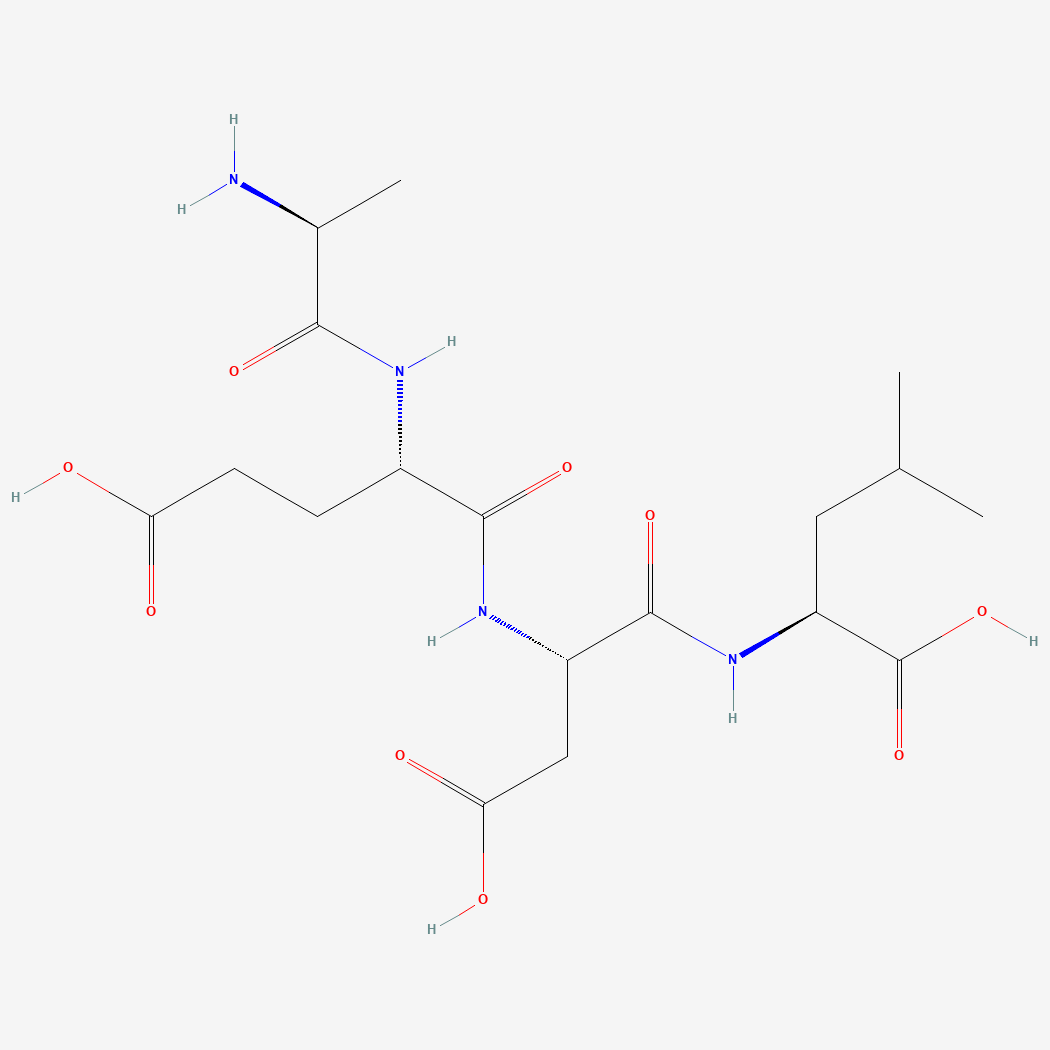
Bronchogen is a short tetrapeptide bioregulator engineered to investigate epigenetic gene regulation and epithelial homeostasis in pulmonary and broncho-alveolar cell cultures. By interacting site-specifically with DNA and histone octamers in bronchial epithelial and alveolar cell lines, Bronchogen modulates transcription pathways controlling mucociliary architecture, pulmonary surfactant synthesis, and pro-inflammatory cytokine suppression (TNF-α, IL-6, IL-8).
$54.00
In stock
| Quantity | Discounted Price |
|---|---|
| 4 - 6 | $51.84 |
| 7 - 9 | $50.76 |
| 10 + | $49.68 |



Bronchogen (known chemically as L-alanyl-L-glutamyl-L-aspartyl-L-leucine or AEDL tetrapeptide) is a synthetic short peptide bioregulator developed within the Khavinson peptide framework. Comprising four active amino acid residues (Ala-Glu-Asp-Leu), Bronchogen represents a targeted organotropic peptide engineered to modulate transcriptional activity in pulmonary, tracheal, and bronchial epithelial tissues.
Due to its low molecular weight (446.5 g/mol), Bronchogen diffuses across cellular and nuclear membranes to interact directly with the major and minor grooves of genomic DNA and histone octamers. In bronchial epithelial and pulmonary cell lines, this epigenetic binding stimulates the synthesis of structural proteins, normalizes mucociliary cellular differentiation, and downregulates pro-inflammatory signaling cascades triggered by oxidative or xenobiotic stress.
Batch-verified for high analytical purity at Modern Aminos, Bronchogen is offered as a 20MG lyophilized dry solid in a 2R glass vial. Researchers studying epigenetic gene modulation, pulmonary tissue resilience, and mucosal barrier dynamics evaluate Bronchogen alongside complementary peptide bioregulators available on the site, such as Chonluten, Vesugen, and Pinealon.
| Compound Name | Bronchogen (AEDL Tetrapeptide Bioregulator) |
|---|---|
| Format / Quantity | 20MG Lyophilized Dry Powder in 2R Glass Vial |
| Biological Target | Pulmonary & Broncho-Alveolar Epithelial Tissue |
| Chemical Classification | Synthetic Short Peptide Bioregulator (Khavinson Peptide) |
| Peptide Sequence | Ala-Glu-Asp-Leu (L-alanyl-L-glutamyl-L-aspartyl-L-leucine) |
| Synonyms / Alt Names | AEDL, SCHEMBL4406472, EX-A16858 |
| CAS Number/CID | 11690869 |
| Chemical Formula | C18H30N4O9 |
| Molecular Weight | 446.5 g/mol |
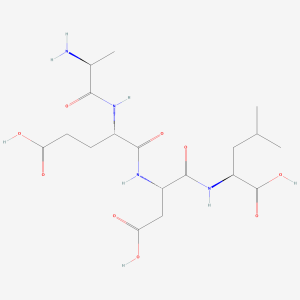
| IUPAC Name | (2S)-2-[[(2S)-2-[[(2S)-2-[[(2S)-2-aminopropanoyl]amino]-4-carboxybutanoyl]amino]-3-carboxypropanoyl]amino]-4-methylpentanoic acid |
| InChIKey | OFZRHTIWKZWPQF-BJDJZHNGSA-N |
| SMILES Code | C[C@@H](C(=O)N[C@@H](CCC(=O)O)C(=O)N[C@@H](CC(=O)O)C(=O)N[C@@H](CC(C)C)C(=O)O)N |
The biochemical pathways and cellular targets of Bronchogen in laboratory research include:
When evaluating published scientific literature and bioenergetic monographs for Bronchogen (Ala-Glu-Asp-Leu):
To evaluate organotropism, peptide length, and biological targets, researchers compare Bronchogen against alternative short peptide bioregulators available at Modern Aminos:
| Bioregulator | Peptide Sequence & Length | Biological Target | Primary Research Focus |
|---|---|---|---|
| Bronchogen | Ala-Glu-Asp-Leu (Tetrapeptide) |
Pulmonary & Broncho-Alveolar Tree | Tetrapeptide binding to nuclear DNA in localized respiratory epithelial cell for increased proliferation and pulmonary structural matrix modulation |
| Chonluten | Glu-Asp-Gly (Tripeptide) |
Pulmonary & Bronchial Epithelium | Suppressing bronchial cytokines, modulating pulmonary structures, and mucociliary differentiation |
| Vesugen | Lys-Glu-Asp (Tripeptide) |
Vascular Endothelium & Vessel Walls | Endothelial gene regulation, microvascular elasticity, and vascular wall homeostasis |
Yes, Modern Aminos is a highly trusted vendor for high-purity research chemicals and reference peptide bioregulators. Every batch undergoes strict third-party analytical testing (including HPLC and Mass Spectrometry) to verify minimum 98%+ chemical purity, exact Ala-Glu-Asp-Leu sequence stoichiometry, correct molecular weight (432.43 g/mol), and complete absence of heavy metals or synthesis impurities.
Bronchogen is a synthetic short peptide bioregulator composed of the four-amino-acid sequence Ala-Glu-Asp-Leu (L-alanyl-L-glutamyl-L-aspartyl-L-leucine / AEDL). It is designed to evaluate epigenetic modulation in pulmonary and bronchial tissues.
Bronchogen crosses cellular and nuclear membranes to bind complementary DNA and histone sites. This interaction relaxes chromatin structure, allowing transcriptional machinery to upregulate structural and protective protein synthesis in bronchial epithelial cells.
Modern Aminos supplies analytical-grade Bronchogen as a 20MG lyophilized dry solid in a sterile 2R glass vial, ensuring solid-state stability and precise gravimetric mass control for benchtop research assays.
In pulmonary cell cultures, Bronchogen normalizes mucociliary differentiation, supports surfactant protein synthesis, and suppresses excessive pro-inflammatory cytokines (TNF-α, IL-6, IL-8) induced by oxidative or environmental stress.
Literature suggests that while both research materials demonstrate similarities in assays involving pulmonary cultures, each has a greater affinity to some cascades than others. Bronchogen demonstrates more affinity for structural differentiation and epithelial remodeling in pulmonary assays. Chonluten targets pro-inflammatory cytokine suppression, oxidative stress, and immunomodulatory signaling in pulmonary cultures.
Modern Aminos utilizes High-Performance Liquid Chromatography (HPLC) to confirm active chemical purity exceeding 99% and Mass Spectrometry (MS) to verify exact molecular weight (432.43 g/mol) and tetrapeptide sequence identity prior to batch release.
Lyophilized Bronchogen glass vials should be stored tightly sealed in a cool, dry environment (15°C to 25°C) or refrigerated for long-term preservation. Protect from direct light, heat exposure, and atmospheric moisture to maintain solid-state peptide stability.
DISCLAIMER: All compounds and research materials provided by Modern Aminos are strictly for laboratory and research use only. They are not approved for human consumption by the Food and Drug Administration (FDA). No products are approved for oral, sublingual, nor in vivo use. These products should not be used for any form of in vivo experimentation or for any other non-laboratory purpose. Any violation or indication of human or animal use will result in immediate removal from being able to purchase products in the future. By purchasing these products, you acknowledge that they will be used exclusively within a controlled and qualified research environment.
DISCLAIMER: All compounds and research materials provided by Modern Aminos are strictly for laboratory and research use only. They are not approved for human consumption by the Food and Drug Administration (FDA). No products are approved for oral, sublingual, nor in vivo use. These products should not be used for any form of in vivo experimentation or for any other non-laboratory purpose. Any violation or indication of human or animal use will result in immediate removal from being able to purchase products in the future. By purchasing these products, you acknowledge that they will be used exclusively within a controlled and qualified research environment.
